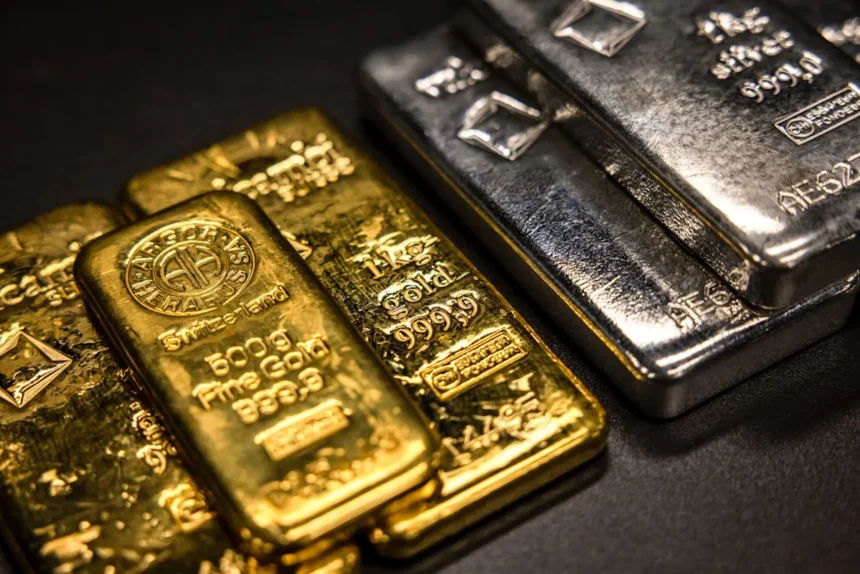
Gold, silver, and platinum prices have surged to unprecedented levels, marking a historic rally for precious metals as the year draws to a close. This uptrend has been largely fueled by rising geopolitical tensions and a weakening US dollar, highlighting the allure of these assets as safe havens.
Spot gold saw significant gains, peaking above $4,530 an ounce after rising as much as 1.2%. The escalation of conflicts, particularly in Venezuela, where the US has intensified pressure on Nicolás Maduro, has amplified gold’s status as a secure investment. Additionally, the US military recently conducted strikes against Islamic State targets in Nigeria, further adding to global uncertainties.
Spot silver also experienced a remarkable rise, gaining 5% to cross the $75 mark for immediate delivery. This marks the metal’s fifth consecutive day of increases, driven by speculative investments and persistent supply issues in major markets following a noticeable short squeeze in October.
The Bloomberg Dollar Spot Index, which measures the strength of the US dollar, fell by 0.7% over the week—the most significant decline since June. A weaker dollar typically bolsters the price of precious metals, making them more appealing to investors.
Both gold and silver have delivered exceptional year-to-date performances, with gold appreciating approximately 70% and silver witnessing a staggering rise of over 150%. This marks the best annual gains for both metals since 1979. The rally has been propelled by substantial central-bank purchases, significant inflows into exchange-traded funds (ETFs), and a series of interest rate cuts by the US Federal Reserve. Lower borrowing costs tend to favor precious metals such as gold and silver, which do not yield interest, and traders appear to be anticipating further rate cuts into 2026.
Moreover, President Trump’s assertive strategies in reshaping global trade and his critiques of the Federal Reserve have added to market momentum. Buildups in national debt have led investors to seek shelter from sovereign bonds, reinforcing demand for gold as a hedge against currency debasement.
Gold’s strength was underscored by its rapid recovery from a prior high of $4,381 in October, suggesting that the earlier surge wasn’t excessively inflated. ETF purchases have played a crucial role in this latest rally, with a notable increase in holdings within State Street Corp.’s SPDR Gold Trust, the largest precious metals ETF, rising by more than 20% over the year.
Silver’s performance has been particularly noteworthy, as major trading hubs like London have experienced increased inflows since the October squeeze. However, much of the world’s accessible supply of silver is currently concentrated in New York, where traders are closely monitoring a US Commerce Department investigation into potential national security risks associated with critical mineral imports. This inquiry could lead to tariffs or other trade restrictions.
Analysts have noted a critical supply-demand imbalance in the silver market. Manav Modi, a commodity analyst, highlighted that many positions are currently held in paper form, requiring physical assets to match the demand. This brings to light the challenges facing traders who rely on tangible silver to fulfill contracts.
Platinum has also witnessed impressive gains, rising over 40% just in December. This month, it has exceeded $2,400 an ounce—its highest level since Bloomberg began tracking the metal in 1987. The boost in platinum prices is attributed to strong demand in both the automotive and jewelry sectors and a forecasted third consecutive annual supply deficit, primarily caused by production disruptions in South Africa.
As of noon in London, gold was priced at $4,510.84, silver climbed to $74.39, platinum reached $2,377.75, and palladium increased by 6%. The trends in precious metals reflect a complex interplay of market dynamics deeply influenced by geopolitical events and economic policy shifts.