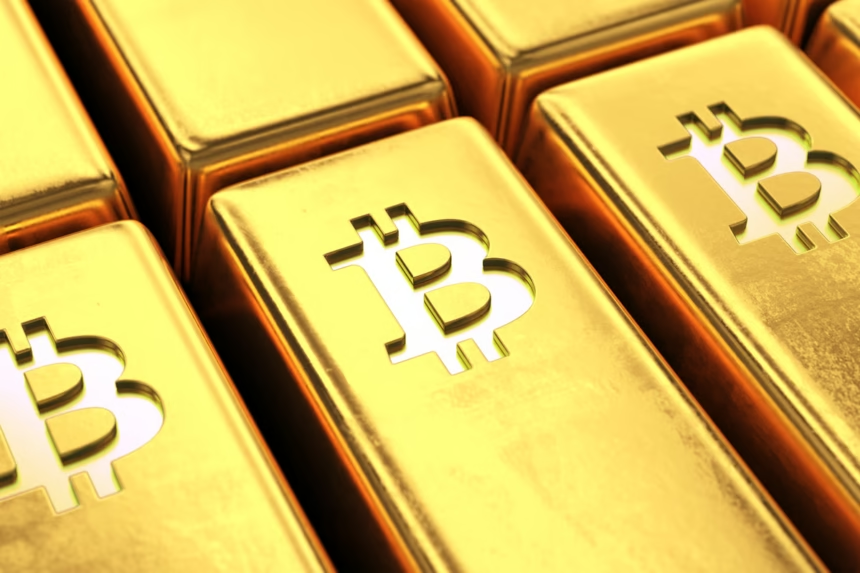
Gold’s recent surge, surpassing $5,190 an ounce, highlights a growing demand for perceived safe assets among investors. This spike in gold prices underscores an environment where the appeal of safety often leads to inflated valuations, pushing riskier investments, particularly those with lower market values, into a more attractive light.
Given the current high valuation of gold, many leading cryptocurrencies are emerging as potentially viable alternatives for investors seeking a solid portfolio. The fluctuating dynamics of these digital assets could provide a more appealing option than investing heavily in gold at its current price point.
Gold has long been considered a stable store of value due to its intrinsic nature; it is not subject to the whims of corporate earnings or government issuance. Most investors, however, do not physically own the precious metal but instead opt for gold exchange-traded funds (ETFs) like SPDR Gold Shares. While ETFs simplify the process of investing in gold, they do not mitigate the current volatility of the asset, which is exacerbated by a swelling number of investors. Additionally, ETFs come with associated expense fees, further diminishing their attractiveness at the present inflated prices.
In contrast, cryptocurrencies are also experiencing their own imperfections; they are generally more volatile and rely on different fundamentals of value. However, as cryptocurrencies like Bitcoin and Ethereum remain significantly lower in price compared to their highs, they provide an interesting alternative for those hesitant to invest in gold.
Bitcoin, limited to a supply of 21 million coins, is designed to become increasingly scarce, thereby functioning as a potential store of value. Despite its volatile nature, Bitcoin retains traits similar to gold in that no government can artificially inflate its supply. At present, Bitcoin is down approximately 30% year-over-year, reflecting the asset’s fluctuating value.
On the other hand, Ethereum does not have a fixed supply cap; however, its value is sustained through utility, particularly in supporting transactions and smart contracts on its blockchain. This has proven vital as the decentralized finance ecosystem continues to expand. Like Bitcoin, Ethereum also faces its share of volatility, having decreased about 26% over the past year.
Given the current economic circumstances and the decreasing prices of both Bitcoin and Ethereum, many investors may find that these digital assets present a more compelling opportunity than investing in gold. With their potential for upward movement aligned with actual economic use cases, Bitcoin and Ethereum could emerge as prudent choices for those looking to diversify their portfolios in this climate of elevated gold prices.