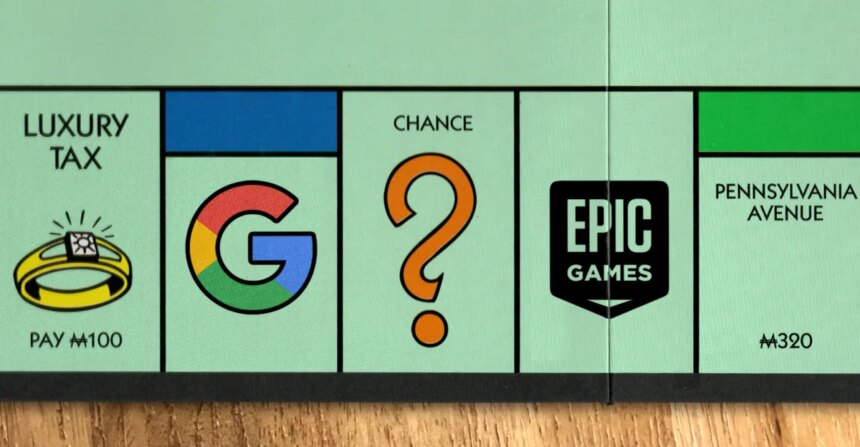
In a groundbreaking move that reshapes the landscape of mobile apps, Google has announced a series of significant changes to its app store policies, following jointly proposed settlements with Epic Games. These alterations, which aim to lower costs for developers and enhance competition in the app market, are set to take effect globally through 2027.
By June 30, Google intends to reduce its app store fees across the United States, the United Kingdom, and the European Economic Area to 20 percent or less, down from the standard 30 percent. This change is part of a broader initiative that includes a new program allowing third-party app stores, such as the Epic Games Store, to be downloaded directly from the web, eliminating previous barriers that restricted their access.
Furthermore, Google will now permit app developers to use their own billing systems alongside Google Play’s billing for in-app purchases. This separation of billing and service fees aims to provide developers with greater financial flexibility. For example, in regions like the EEA, UK, and US, developers using Google Play’s billing will see a reduced market-specific rate of 5%. Additionally, the in-app purchase service fee is set to drop to 20% for new installs, incentivizing developers through programs like the revamped Apps Experience Program and the Games Level Up program.
The timeline for these fee changes is explicit: by June 30, the new fees will be introduced in major regions, with a phased rollout in Australia by September 30, followed by Korea and Japan by year-end, and the remainder of the world by September 2027.
Importantly, third-party app stores that qualify for Google’s “Registered App Stores” program will not incur ongoing transaction fees, requiring only a nominal one-time fee to facilitate their enrollment. This initiative aims to streamline the installation process of these stores, providing a more user-friendly experience for Android users.
However, the implementation of these changes isn’t without conditions. Google has emphasized that it will reserve the right to determine which app stores qualify for this program and outlined specific requirements to ensure these stores adhere to standards regarding safety and performance. Additionally, this ongoing process requires compliance with existing legal mandates, especially in the US where Google’s obligations are subject to judicial review.
Despite these advancements, significant challenges remain. Critics point out that Google’s new direction still falls short of addressing all antitrust issues in the US, notably a court-ordered requirement that Google must offer rival app stores within its own platform. The tension between Google and Epic Games continues as they navigate legal hurdles while advocating for changes that they believe will foster a healthier app marketplace.
Epic’s CEO expressed optimism about the evolving landscape, suggesting that these changes will revitalize competition in the market, contrasting sharply with Apple’s model, which still imposes stringent limitations on app distribution.
As the mobile app ecosystem continues to evolve, both Google and Epic are positioning themselves to not only meet legal demands but also to redefine user and developer experiences in the highly competitive space.