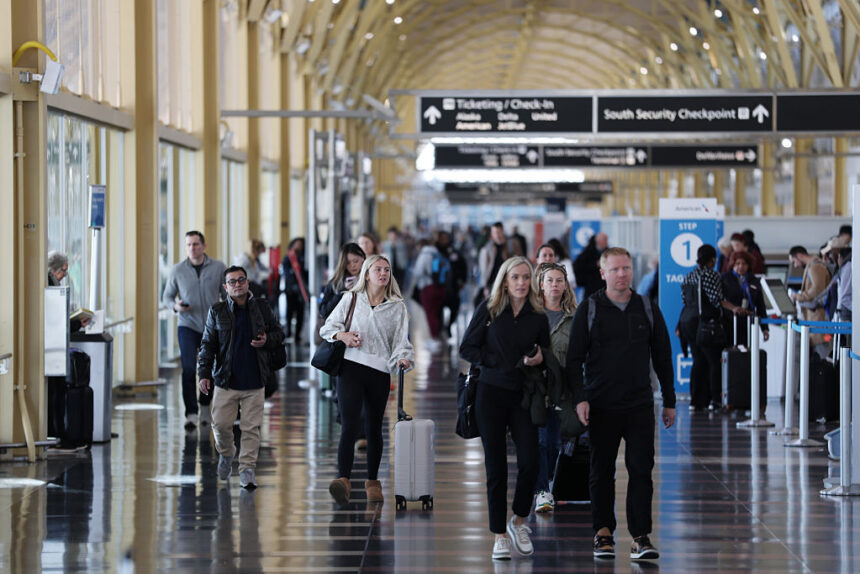
A potential 20% reduction in airline flights is looming if the ongoing government shutdown persists, raising alarms about the significant impact it could have on the economy. Transportation Secretary Sean Duffy has warned that the cuts may be implemented as soon as next week unless a resolution is reached.
Former federal crash investigator Jeff Guzzetti spoke with WTOP, expressing that such drastic reductions would be “earth-shattering.” He emphasized that while aviation safety remains intact, the logistical challenges and economic ramifications for airlines and passengers could be severe. Guzzetti noted that the measure is aimed at maintaining a margin of safety within the aviation system, but the scale of the cuts represents a dire economic scenario. “We’re talking hundreds of millions of dollars a day lost in air commerce and airline profits,” he stated.
As the shutdown drags on, Guzzetti highlighted an increasingly critical issue: air traffic controllers have been working without pay for over 40 days. Many are also facing mandatory overtime, compounding their logistical difficulties as they approach the busy Thanksgiving travel season. He also pointed out that before the shutdown, the air traffic control system was already short roughly 3,000 controllers due to retirements and the mandatory retirement age of 55. With new controller training currently halted due to funding issues, the situation is expected to worsen. This training process is lengthy, and nearly 20% of candidates typically do not complete it.
Duffy, along with Nick Daniels, head of the air traffic controllers’ union, has issued warnings that the situation continues to deteriorate, putting additional financial strain on individuals forced to work without compensation. FAA employees, having already missed one paycheck on October 28th, are facing uncertainty as their next payday approaches.
In response to the tightening situation, the National Business Aviation Association (NBAA) has advised its members to avoid the busiest commercial airports and consider secondary airports instead. NBAA CEO Ed Bolen stressed the importance of flexibility in business aviation, suggesting that operators can adjust departure and arrival times, utilize alternate airports, and explore airline travel for flight crews to ensure mission success while alleviating pressure on the system.
Ultimately, with the Thanksgiving holiday travel season just around the corner, the ramifications of a potential flight reduction could resonate throughout the country, underscoring the urgent need for a resolution in Congress to end the shutdown.