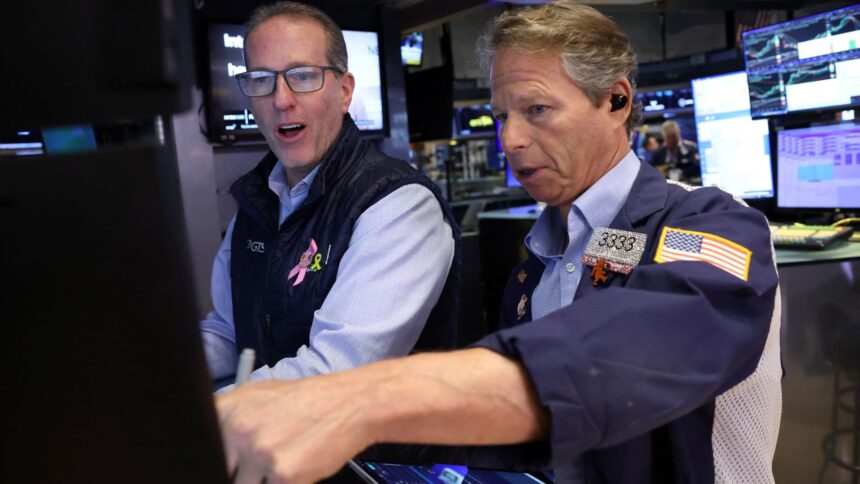
The historic U.S. government shutdown has officially come to an end following President Donald Trump’s signing of a funding bill late Wednesday. This development could have promising implications for the stock market as investors hope to see a surge in financial activity.
The funding measure, which passed in the House with a narrow margin of 222-209, will keep governmental operations running through the end of January. The shutdown had significant consequences, including the suspension or delay of critical economic data, widespread disruptions at airports due to air traffic controller shortages, and complications with the Supplemental Nutrition Assistance Program.
During the shutdown, the stock market experienced volatility, evidenced by the S&P 500’s decline of over 2% in October. The index has shown mixed performance in November so far, leaving investors eager for the stability that may follow the resolution of the shutdown.
Looking ahead, analysts are optimistic about the stock market’s potential rebound. Michael Welch, a technical analyst at Canaccord Genuity, emphasized that as various economic indicators are released to clear the backlog caused by the shutdown, markets are likely to gain clarity on its economic implications. Historical evidence supports this optimism: following past shutdowns, the S&P 500 has typically experienced an average increase of 3.3% three months later and 7.8% six months later. Furthermore, a year after previous shutdowns, the S&P 500 has averaged an 11.5% gain, with a notable 24% rise after the 2018 shutdown that lasted for 35 days.
Additionally, seasonal patterns could further boost market performance. Traditionally, the period from November 1 to April 30 has been favorable for the Dow Jones Industrial Average, with average gains of around 7.2%, according to the Stock Trader’s Almanac. As investors digest this latest development and the accompanying economic data, optimism reigns for a market recovery in the coming months.