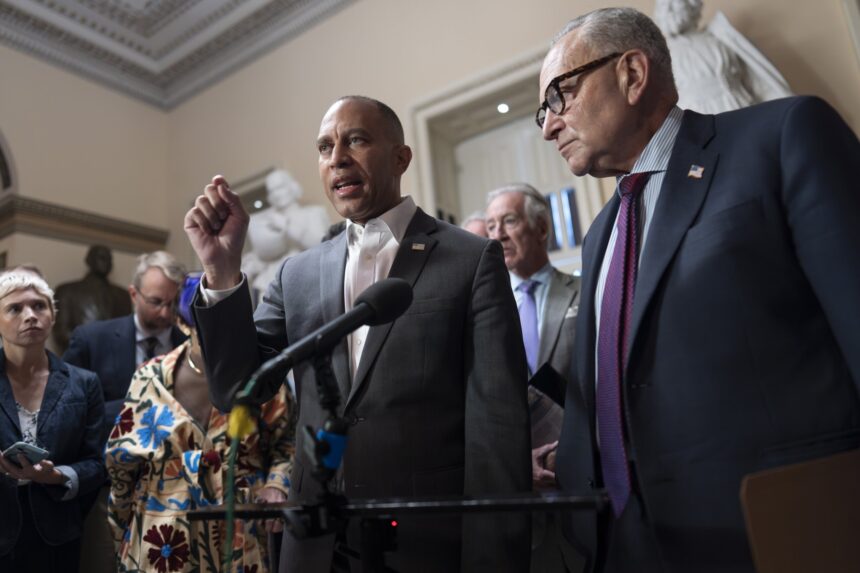
As a potential government shutdown looms just hours away, health care has emerged as a significant bone of contention between Republicans and Democrats. Central to the debate is the future of premium subsidies under the Affordable Care Act (ACA), which have become crucial for Americans seeking affordable health coverage.
Currently, federally enhanced tax credits that support millions of Americans buying health insurance through ACA marketplaces are due to expire at the end of 2025. However, Democrats are advocating for immediate action to extend these subsidies in order to ensure that there are no disruptions during the imminent open enrollment period.
Anne Reid, a policy director at the Milken Institute School of Public Health, highlights the importance of these subsidies, noting that approximately 22 million individuals are enrolled in ACA marketplaces, with most receiving some form of subsidization linked to their income. Without an extension of these credits, Reid warns that there is a substantial risk of millions losing coverage or facing skyrocketing premiums.
The subsidies were previously expanded to enable more Americans to qualify for financial assistance when obtaining health insurance. “The credits were enhanced by raising the minimum income threshold, allowing a broader demographic to receive help with their premiums,” Reid explained. Given her background as a senior congressional staffer involved in health workforce policy during the ACA’s inception, Reid emphasizes the necessity for Democrats to include this extension in any continuing resolution aimed at averting a government shutdown. For them, it is a non-negotiable element of essential legislation.
On the other hand, Republican leaders are calling for a “clean” continuing resolution that focuses solely on maintaining government operations, arguing that the fiscal priority should be managing immediate budget concerns. GOP representatives propose extending current funding levels through mid-November to allow more time for negotiations on long-term funding solutions.
University of Maryland finance professor David Kass underscores the urgency of the Democrats’ position, arguing that if these subsidies are not included, fewer Americans will be able to afford health insurance as the open enrollment period begins. He echoes Reid’s sentiment regarding the urgency of timely decisions for both consumers and insurers, stating, “Days and weeks matter in terms of being able to rightsize the premium levels.”
The impending shutdown carries particular weight for the D.C. region, which is home to a considerable federal workforce. The financial consequences of job insecurity could be sharply felt, as highlighted by Reid.
As budget negotiations remain stalled and open enrollment looms, the absence of clarity surrounding premium subsidies puts millions of Americans at risk of losing access to affordable health coverage, raising concerns about the broader implications for health care accessibility in the upcoming months.