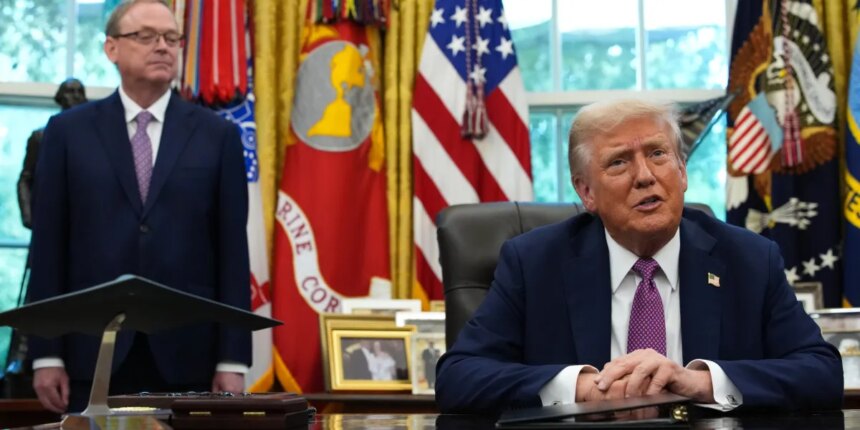
National Economic Council Director Kevin Hassett, a prominent candidate to succeed Jerome Powell as chair of the Federal Reserve, has emphasized the independence of the Fed, downplaying any potential influence that President Donald Trump might have on interest rate decisions. This assertion comes amid Trump’s ongoing claims that his financial successes warrant a greater say in monetary policy.
In a recent interview on CBS’ Face the Nation, Hassett acknowledged Trump’s strong opinions but reiterated that the Federal Reserve operates independently. He highlighted the role of the Federal Open Market Committee (FOMC) in the decision-making process, pointing out that it ultimately remains a committee that votes on key issues. Hassett expressed a willingness to communicate with the president regularly, noting the enjoyment he finds in discussing economic policies, irrespective of his position within the Fed.
Trump’s statements have stirred speculation, particularly after he named Kevin Warsh, a former Fed governor, as a top candidate for the chairmanship in an interview with the Wall Street Journal. This revelation resulted in a shift in Wall Street’s betting markets, where Hassett’s likelihood of being nominated dropped from 80.6% to 50%, while Warsh’s chances surged to 41%.
As the deadline for Powell’s reappointment approaches in May 2026, Trump has stated his intent to nominate a new chair. Recently, he met with Warsh at the White House, reportedly probing him on his commitment to supporting rate cuts.
When asked whether Trump’s opinions would hold equal weight to those of FOMC voting members, Hassett clarified that while the president’s input could be influential if it is grounded in sound data, it ultimately would not sway the committee’s votes if they disagreed.
Though Hassett has been a supporter of more easing in monetary policy and a staunch ally of Trump’s economic agenda, there have been concerns among his former colleagues. They worry he may be prioritizing political loyalty over the independent analysis traditionally associated with the Fed. Since joining Trump’s second term, he has made frequent appearances on cable news, where he often defends the administration’s policies, minimizes negative economic data, and aligns himself with the White House’s narrative.
In the backdrop of this political dynamic, the Fed’s early reappointments of regional bank presidents have alleviated worries about the central bank’s independence amidst Trump’s calls for significant rate cuts. Following a proposal that would impose residency requirements on Fed presidents—an idea Hassett endorsed—many analysts expressed concern about impending leadership changes within the Fed. Economists like Justin Wolfers have interpreted the recent announcements as a move to protect the Fed’s autonomy from political pressures.