










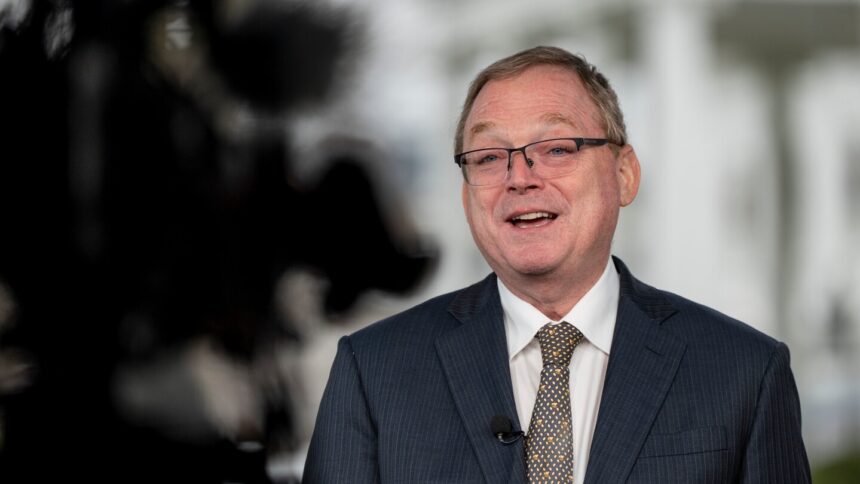
In a recent interview on CBS News’ “Face the Nation,” Kevin Hassett, a prominent contender for the role of Federal Reserve chair under President Donald Trump, clarified his position regarding the influence of the president on monetary policy decisions. He emphasized his commitment to relaying Trump’s views to Federal Reserve officials while firmly stating that these opinions would not necessarily carry weight in the formulation of interest rate decisions. “No, he would have no weight,” Hassett asserted when questioned about the equal consideration of Trump’s views by the Fed’s interest-rate setting committee.
Hassett emphasized that the validity of Trump’s opinions would depend on their basis in data rather than political considerations. “His opinion matters if it’s good, if it’s based on data,” he explained. He indicated that the committee would ultimately make independent decisions, suggesting that even if the president’s recommendations were sound, the committee could choose to vote differently.
These comments arise amid reports that Trump is conducting final interviews with candidates to replace the current Fed chair, Jerome Powell, whose term is set to conclude next May. Trump has been vocal about his expectations for the new chair, insisting on a significant reduction of the central bank’s key interest rate from the current approximately 3.6% to 1% or lower—a stance that is largely unsupported by the broader economic community. This has sparked renewed discussions about the potential impacts of political influence over the Federal Reserve, a historically independent institution.
Trump’s remarks on the importance of his input on interest rates have diverged from the tradition observed by previous presidents of avoiding public commentary on Federal Reserve decisions. “I certainly should have a role in talking to whoever the head of the Fed is,” Trump stated, highlighting his belief in the value of his financial expertise.
Current speculation points toward Kevin Warsh, a former Fed governor and fellow at the Hoover Institution, as the frontrunner for the Fed chair position, though Hassett has also been indicated as a potential choice. Trump has expressed admiration for both candidates, introducing a sense of competition between them.
Despite the political calculations at play, Hassett reaffirmed the need for the Fed’s independence. “In the end, it’s a committee that votes,” he remarked, adding that he would enjoy an ongoing dialogue with the president about economic policies. As the situation unfolds, the choice of Fed chair will likely have significant implications for the direction of U.S. monetary policy amidst an evolving economic landscape.


