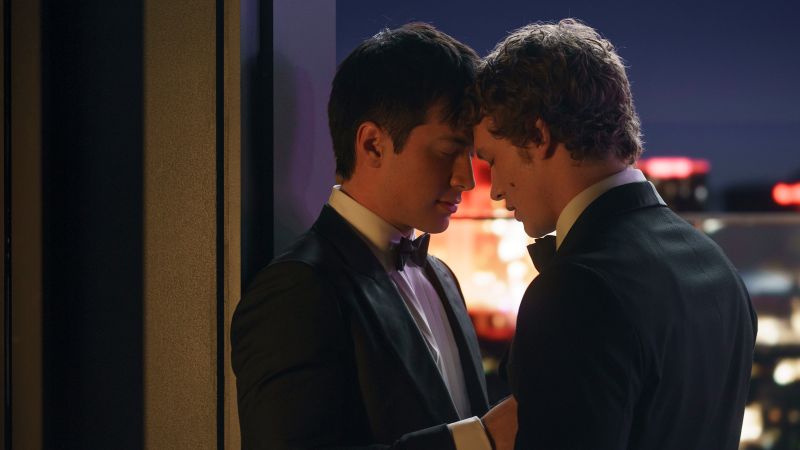
If your social media feeds have been inundated with memes and discussions about the HBO Max series centered on two rival male hockey players, it’s a cultural moment that speaks to the shifting landscape of television storytelling. “Heated Rivalry,” adapted from Rachel Reid’s novels, explores the complexities of love and competition between characters Shane Hollander and Ilya Rozanov, portrayed by Hudson Williams and Connor Storrie respectively.
Set against the backdrop of Major League Hockey, the series profiles these two emerging stars in a sport often characterized by traditional masculinity. While on the ice, they are pitted against each other and subject to constant media comparisons, off the rink they engage in a very different form of rivalry—one that brings them closer through intimate encounters. Their evolving relationship unfolds in a series of steamy liaisons that reveal the deeply personal struggles each faces.
Shane, a Canadian raised in a sheltered environment by overbearing hockey parents, contrasts sharply with Ilya, a Russian with a tough exterior. Their interactions illustrate familiar tropes—good boy meets bad boy—but with a refreshing twist that emphasizes their genuine chemistry and emotional connection.
What distinguishes “Heated Rivalry” from other shows, aside from its same-sex romance, is its unflinching portrayal of intimacy. The explicit scenes do not sidestep the complexities of their relationship, offering viewers a candid look at their sexual escapades, playful banter, and the nuances of consent. This has resonated strongly with audiences, giving rise to the hashtag “gay hockey show” on social media platforms.
Despite the series drawing questions about its premise being oversimplified, it also invites deeper reflection. Critics have pointed out that dismissing it with reductive taglines undermines the nuanced storytelling at play. Those who delve into the show understand it carries emotional weight, particularly in moments like Shane’s struggle to when Ilya wins the Stanley Cup, which underscores their bond amid societal pressures in a sport that has historically been unwelcoming to open queerness.
As conversations about representation in media continue to evolve, “Heated Rivalry” has been noted for not just its romantic focus, but for tackling the inherent challenges faced by LGBTQ+ individuals in sports. Reviewers have highlighted how the series balances passion with character development. This is seen in episodes that occasionally shift focus, exploring romances beyond the central couple, while maintaining a poignant depiction of longing and emotional growth.
The show’s impact is reflected in the way it has sparked conversations about the portrayal of queer relationships and intimacy—emphasizing that audiences are hungry for stories that acknowledge the full spectrum of human emotions and experiences. As the series progresses, it promises to further explore these themes, inviting viewers to engage with the romance genre on various levels.
New episodes of “Heated Rivalry” premiere Thursdays on HBO Max, a platform part of CNN’s parent company Warner Bros. Discovery, continuing to push the envelope in representation and narrative depth within mainstream media.