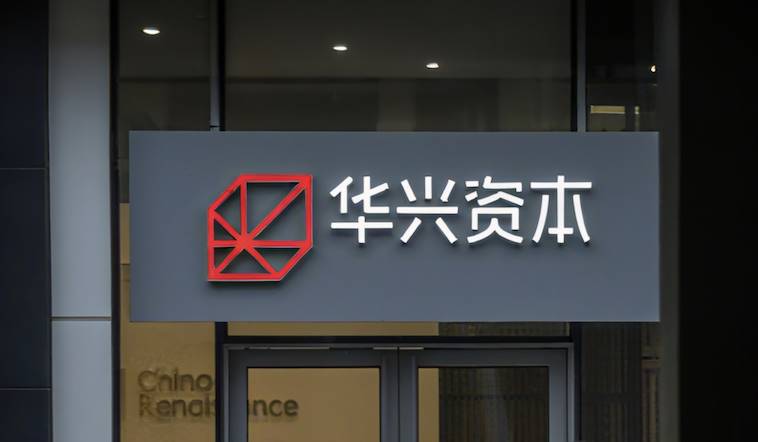
In the summer of 2025, Huaxing Capital found itself back in the spotlight following its recent memorandum of cooperation with YZi Labs, which is the newly branded entity formerly known as Binance Labs. This partnership aims at investing a substantial $100 million into Binance’s platform currency, BNB. This investment follows a similar move just two months prior, where Huaxing’s board of directors had greenlit capital injections into the Web3 and cryptocurrency realms. Such aggressive activity has ignited speculation regarding Huaxing’s intentions, suggesting it may be on the cusp of a significant transformation in a rapidly evolving financial landscape.
Huaxing Capital’s unique position within China’s investment banking sector cannot be understated. Unlike traditional giants such as CICC and CITIC, Huaxing lacks state-owned backing, nor does it possess the storied legacy of Western institutions like Goldman Sachs or Morgan Stanley. Founded in 2005, Huaxing has continually aligned its growth trajectory with the meteoric rise of China’s internet, orchestrating key mergers including those of Didi and Kuaidi, Meituan and Dianping, and the integration of 58.com and Ganji. As a result, the firm has played an integral role in nearly every major merger and acquisition that has defined its industry. However, as the internet economy transitions from an expansion phase to focusing on existing supply and grappling with heightened anti-monopoly regulations, Huaxing now faces unprecedented challenges that threaten its operational viability.
The pivot to Web3 and blockchain technology may represent Huaxing’s best shot at self-rescue, or it could symbolize a broader struggle for traditional investment banks in a digital era. In stark contrast to its impressive 2021 performance—where the firm reported a revenue of 2.504 billion yuan and net profits that surged by over 56%—2022 marked a downturn. Huaxing’s annual operating income plummeted to 1.533 billion yuan, revealing an 8.36% year-on-year decrease, and the firm recorded devastating losses totaling 564 million yuan. This decline reflects a broader market cooling characterized by a 23.5% drop in total M&A transactions, with sectors like Technology, Media, and Telecommunications (TMT) experiencing declines as steep as 41%. For Huaxing, relying heavily on TMT mergers and acquisitions means the slowdown has dealt a significant blow to its core business model.
The challenges Huaxing faces are not merely statistical; they reflect a profound shift in industry dynamics. At its height, the firm thrived in a landscape marked by rapid internet growth, where it served as the quintessential matchmaker in a flourishing capital market. However, today’s environment—defined by transparency, disintermediation, and open access to information—has rendered its previous business model outdated. Reports suggest that Huaxing still operates with a centralized, personality-based approach under Bao Fan’s influence—one that is increasingly anachronistic in a world that prioritizes decentralized trust.
Notably, Huaxing’s venture into Web3 isn’t entirely spontaneous. The firm has quietly engaged in cryptocurrency investments since as early as 2018, participating in Circle’s Series E funding round—a move that went largely unnoticed. While Huaxing’s minimal stake in Circle may not have resulted in major financial returns, the investment did rekindle investor interest, particularly when Circle’s success helped boost the share price of China Renaissance.
With Bao Fan’s unexpected disappearance, Huaxing capital entered a new chapter in leadership, handing over the reins to Xu Yanqing, who has proposed the “Huaxing 2.0” strategy. This initiative aims to pivot away from traditional internet businesses towards hard technologies, Web3, and digital finance. Timing this shift to coincide with favorable policy developments in Hong Kong, such as the passing of the Stablecoin Bill, Huaxing officially committed to a $100 million investment in the crypto space.
The implications of Huaxing’s strategic partnership with YZi Labs and its broader Web3 ambitions are profound. As the first Hong Kong-listed company to acquire assets in BNB, Huaxing services a dual role: not only as an investment channel for traditional institutions looking to enter the crypto environment but also as a potential influencer of new financing avenues in mergers and acquisitions as Web3 continues to develop.
However, Huaxing is navigating a complex landscape filled with risks. The traditional role of investment banks is undergoing rapid changes; the opaque nature of capital flows and governance in many crypto ventures contrasts sharply with Huaxing’s historical strengths in information asymmetry. The firm must also contend with the inherent volatility and unpredictability of the crypto market, where reputational risks loom large. The recent downfall of credible entities, most notably Singapore’s Temasek following the FTX collapse, serves as a stark reminder of the potential repercussions of mismanaging investments in the space.
For Huaxing Capital, the path ahead is fraught with uncertainty. The firm is grappling with how to maintain its relevance as it transitions into a new financial paradigm marked by decentralization. Moving from a reliance on traditional services to establishing itself as a competitive force in the secondary market presents its own set of challenges. Without a thorough understanding of cryptocurrency frameworks and market dynamics, Huaxing may struggle to carve out a space in Web3.
What remains clear is that for Huaxing Capital, the journey into the digital asset domain is not just an exploration of new opportunities but a necessary evolution driven by external pressures. In the past two decades, Huaxing ascended by adeptly maneuvering through the rapid growth of China’s internet economy; now, it finds itself at a critical juncture that necessitates a painful departure from its established identity. As traditional institutions grapple with the question of adaptation versus obsolescence, Huaxing’s experience may provide valuable insights into the difficulties of achieving a true digital transformation.