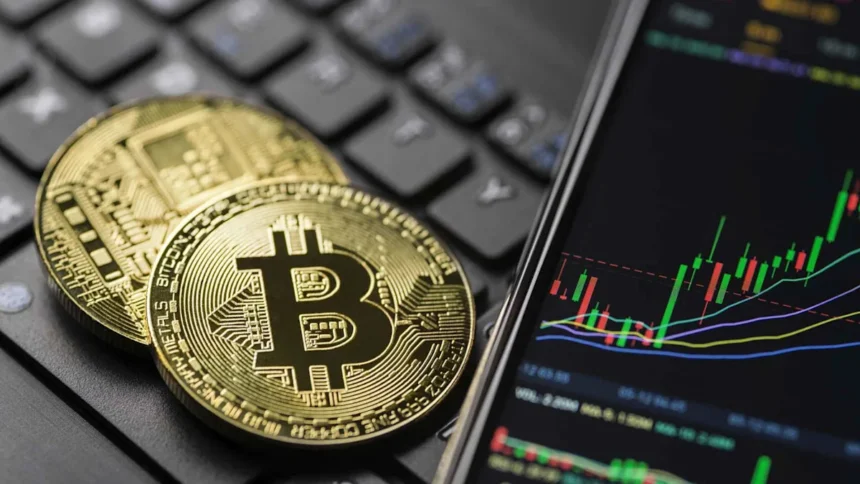
Bitcoin remains the frontrunner in the cryptocurrency landscape, boasting a staggering market capitalization of over $2 trillion and attracting millions of global investors. This digital asset has exhibited extreme volatility over the past decade, evolving from a relatively unknown asset valued at mere pennies to a widely recognized investment vehicle and, as some assert, a legitimate store of value.
Bitcoin was launched in 2009 by the enigmatic figure Satoshi Nakamoto, marking the advent of the first decentralized digital currency. Its mainstream recognition began gaining traction in the mid-2010s when, in 2015, Bitcoin traded approximately at $330 per coin. At this time, it was primarily utilized by tech-savvy individuals and early adopters who recognized the potential of blockchain technology.
The expansion of cryptocurrency exchanges, including the popular platform Coinbase, catalyzed Bitcoin’s price appreciation. By late 2017, the cryptocurrency experienced an explosive surge, reaching nearly $20,000 per coin. This rapid ascent garnered widespread attention but was short-lived. The subsequent year witnessed a significant downturn, with Bitcoin’s value plummeting nearly 80% to below $4,000, marking the end of what many considered a speculative bubble.
The COVID-19 pandemic served as another pivot point for Bitcoin. Between March 2020 and November 2021, its price skyrocketed from around $5,000 to an impressive peak of over $68,000. This dramatic increase was fueled by extensive money printing, sustained low-interest rates, and an influx of institutional investors.
However, the outlook shifted again in 2022 as rising interest rates and a series of notable crypto failures—including the collapse of FTX—led to another plunge, with Bitcoin dropping more than 70% from its peak, prompting many to abandon their investments in the cryptocurrency.
Fast forward to 2025, and Bitcoin astonished the market once more, surpassing the $100,000 mark, reaching as high as $120,000 per coin. An investment of $100 in Bitcoin in late 2015, when each coin was priced around $330, would now be worth approximately $30,906—representing a remarkable return of 309 times the initial investment. Even a modest $10 investment would yield over $3,000 today.
This performance positions Bitcoin far ahead of traditional equities, with the S&P 500 delivering roughly 907% returns over the same period. Nonetheless, questions arise regarding Bitcoin’s viability as an investment moving forward. Bitcoin has seen significant maturation, with rising institutional adoption from firms like BlackRock, Fidelity, and Vanguard introducing Bitcoin exchange-traded funds (ETFs), alongside corporations such as MicroStrategy holding substantial Bitcoin reserves.
Despite its growing legitimacy, Bitcoin carries inherent risks. It does not provide income, its price is notoriously volatile—capable of swinging thousands of dollars within a week—and while regulatory frameworks are improving, governments are still grappling with the classification and taxation of cryptocurrencies.
The fundamental case for Bitcoin, however, remains compelling, characterized by its scarcity—limited to 21 million coins—decentralized nature—free from government or central bank control—and increasing global acceptance by businesses and payment platforms.
Currently, Bitcoin functions as a potential hedge against inflation and currency devaluation, often likened to “digital gold.” Financial advisors typically recommend limiting exposure to cryptocurrencies, suggesting an allocation of 1% to 5% of an investment portfolio, contingent on individual risk tolerance.
For those contemplating entering the Bitcoin market today, it is advisable to adopt a cautious approach: utilize reputable exchanges such as Coinbase or Fidelity, start with small investments using dollar-cost averaging (DCA) to mitigate volatility, secure holdings in a hardware wallet for long-term safety, and maintain a long-term investment strategy rather than seeking immediate profits.