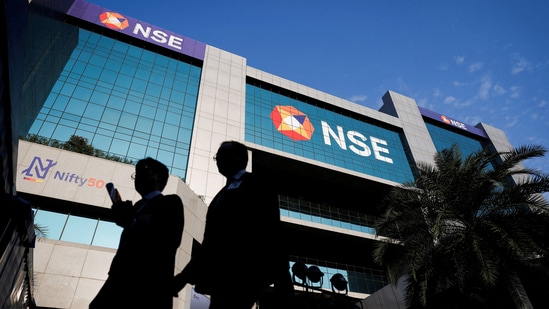
India’s stock market faced significant turmoil today, driven by escalating tensions in the Middle East following military actions by the US and Israel against Iran. As a result, crude oil prices surged, prompting investors to retreat to safer assets, which negatively impacted market sentiment. The Nifty 50 index plunged by up to 2.11%, hitting an intraday low of 24,645.10 points, while the BSE Sensex dropped 3.37% to settle at 78,543.73. This represents the most severe intra-day decline for the Nifty since February 1 and for the Sensex since April 7, 2025.
Compounding the situation, the Indian rupee depreciated against the dollar, trading at 91.25, and government bond yields rose as fears of a protracted conflict in the Middle East grew. Analysts urged caution, suggesting that panic selling is often counterproductive during crises. V.K. Vijayakumar, Chief Investment Strategist at Geojit Investments, commented that historical data shows such geopolitical events typically do not influence market performance six months down the line.
The mounting concerns following a drone strike that prompted Saudi Aramco to shut down its Ras Tanura refinery further escalated oil prices, which reached $80 per barrel. In light of the situation, Indian state-run refiners, led by Indian Oil Corporation, are reportedly considering contingency plans, including sourcing oil from Russia due to the instability in the Strait of Hormuz, a critical transit route for oil exports.
Subsequently, the Indian Manufacturing Purchasing Managers’ Index (PMI) showed growth, indicating robust domestic demand; however, export growth saw a significant slowdown, marking its weakest rate in nearly a year and a half.
As trading progressed, the India Volatility Index (VIX) skyrocketed to a nine-month high, reflecting the heightened uncertainty in the market. Stocks across all sectors exhibited weakness, particularly in oil marketing companies like Indian Oil, Bharat Petroleum, and Hindustan Petroleum, which fell by up to 4%. Conversely, shares of Indian defense companies experienced gains amid the ongoing conflict, while aviation stocks suffered due to flight cancellations related to the conflict, with companies like IndiGo and SpiceJet witnessing drops of up to 13.5%.
Larsen & Toubro emerged as the biggest loser on the Nifty, falling 7.48%, as concerns grew over potential delays in projects linked to its substantial engagements in the Middle East. Overall, all major sectors faced declines amid rising crude oil prices and the broader geopolitical instability.
Investors are now closely monitoring developments as they assess the impact of the Iran war on the markets and the economy, with the specter of further volatility looming large.