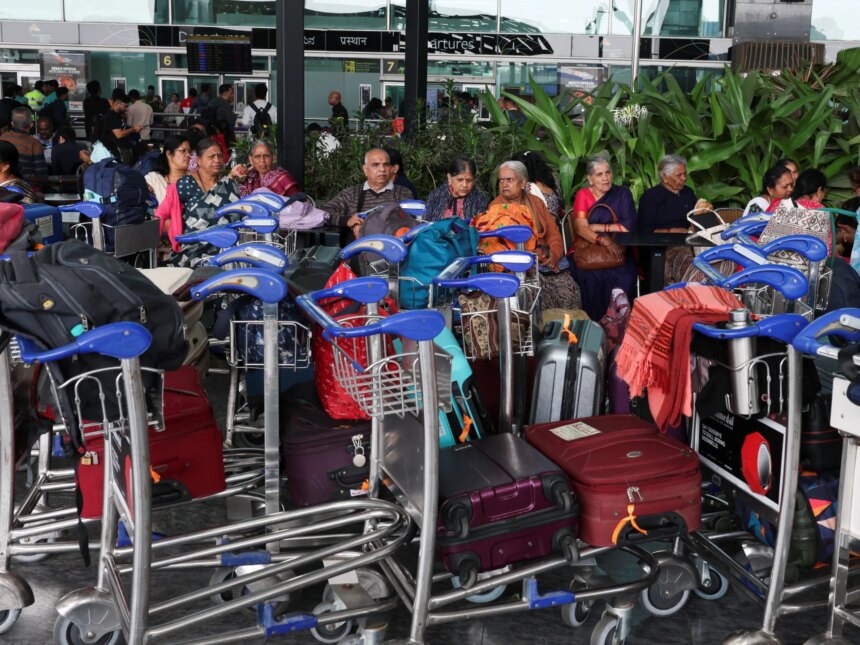
Air travel across India has plunged into chaos as IndiGo, the country’s largest airline, has been forced to cancel over 2,000 flights since last Friday, leaving countless passengers stranded at various airports nationwide. This crisis unfolded amid a peak travel period, exacerbating public frustration and prompting governmental intervention.
IndiGo typically operates around 2,200 flights daily but has been grappling with significant pilot shortages, a consequence of its inadequate preparation for new pilot rest and duty regulations imposed by the government last year. Although the airline received temporary exemptions from these regulations, disruptions have persisted, with more than 600 flights canceled on Sunday alone. The airline has projected that normal operations may resume between December 10 and 15, marking a significant setback in its 20-year history.
The troubles at IndiGo began escalating on December 2, with growing delays and cancellations primarily attributed to a lack of available pilots. Major cities such as Mumbai, Hyderabad, and New Delhi reported widespread flight disruptions, with cancellations peaking to more than 1,000 flights on Friday alone. Reports indicated that on Saturday, flights affected included 124 in Bengaluru, 109 in Mumbai, 86 in New Delhi, and 66 in Hyderabad.
The newly implemented Flight Duty Time Limitations (FDTL) regulations were aimed at enhancing pilot working conditions but inadvertently contributed to the airline’s current turmoil. Following the mandatory deadlines, IndiGo found itself unprepared, leading to operational delays and cancellations due to insufficient pilot staffing. The regulations, introduced to improve safety, include increased weekly rest periods for pilots and stricter caps on flying hours, measures that IndiGo had difficulty adjusting to.
Industry experts and pilot unions have criticized IndiGo for poor foresight and planning regarding these rule changes. The Federation of Indian Pilots specifically noted the management’s failure to prepare for the impending regulatory landscape despite having two years to do so. Their comments highlight deeply entrenched issues within the airline, such as a hiring freeze and purported pay restrictions that can impede recruitment.
In response to the crisis, the government has initiated a high-level inquiry to investigate the factors contributing to the flight disruptions. Civil Aviation Minister Kinjarapu Rammohan Naidu attributed the chaos to IndiGo’s mismanagement while indicating that other airlines had adapted to the new regulations successfully. The government has also provided support to stranded passengers, including free train tickets to help them reach their destinations.
Amidst this turmoil, IndiGo has received exemptions from specific operational rules until early February, allowing for increased flight landings during off-peak hours. Nonetheless, the Airline Pilots Association of India has raised concerns, arguing that these regulations exist primarily to protect pilot safety and, by extension, the lives of passengers. The Directorate General of Civil Aviation (DGCA) has issued warnings to the airline, suggesting possible regulatory repercussions for its handling of the disruption.
Furthermore, the civil aviation authority announced measures to control rising airfares, which have surged due to increased demand and decreased flight availability. As the market grapples with fare inflation, the Ministry of Civil Aviation has taken steps to cap ticket prices on certain routes, particularly those over distances of 1,000 kilometers.
While other airlines like Air India and Akasa Air navigated the situation without experiencing significant disruptions, the ripple effects of IndiGo’s operational faltering have impacted overall air travel costs and availability in the region. Reports indicate that despite a proactive approach by some airlines to manage pricing during the crisis, others have sought to capitalize on the upheaval.
IndiGo’s CEO, Pieter Elbers, publicly acknowledged the mishap and expressed regret for the operational failures, indicating that restoring normalcy will take time. He emphasized a multi-faceted strategy aimed at improving communication with customers regarding cancellations and realigning with regulatory requirements.
As of Sunday afternoon, IndiGo reported an increase in its operations, with plans to operate over 1,650 flights, restoring services across most of its destinations. Until the disruptions are fully resolved, passengers will be offered complete waivers on cancellation and rescheduling fees for bookings made until mid-December.
The turbulence experienced by IndiGo serves as a pivotal reminder of the complexities of airline management, particularly in adapting to changing regulations while ensuring consistent service levels amid unprecedented demand pressures.