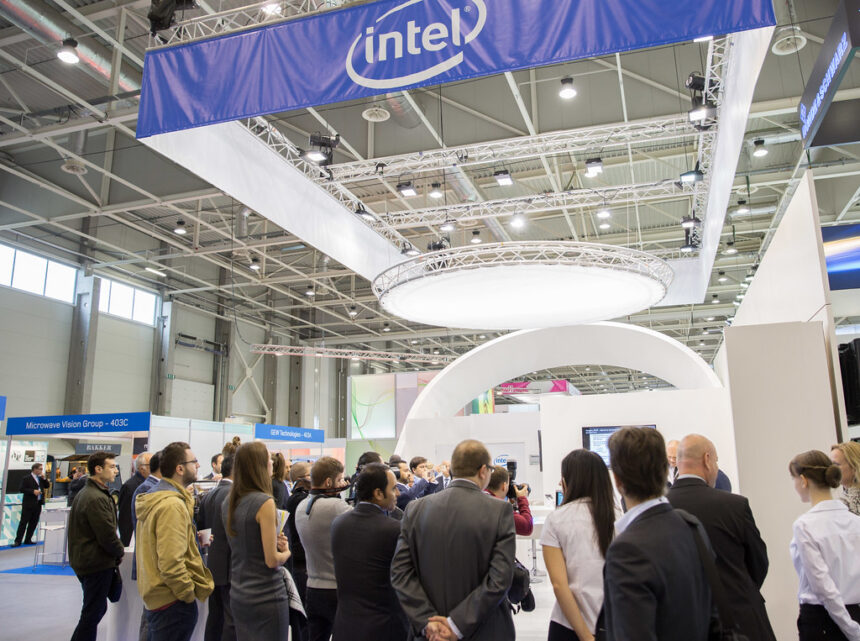
Intel Corporation has emerged as one of the most promising AI stocks as we approach 2026, according to a recent analysis. The company outlined its strategic vision at the RBC Capital Markets Global Technology, Internet, Media, and Telecommunications (TIMT) Conference 2025, where John Pitzer, the corporate vice president for Global Treasury and Investor Relations, provided insights into its current initiatives and challenges.
During the conference, Pitzer emphasized the company’s focus on improving margins, expanding market share, and developing robust AI strategies. He acknowledged that Intel is currently grappling with supply constraints, which are projected to peak in the first quarter of 2026, presenting a significant hurdle as the company navigates through a competitive landscape.
A noteworthy element of Intel’s strategic blueprint is its $5 billion investment from NVIDIA Corporation. This partnership is expected to finalize by the year’s end, allowing Intel to supply a custom Xeon chip for data centers. NVIDIA will then integrate this product and oversee the go-to-market strategy, highlighting a collaborative approach that could enhance both companies’ standings in the AI domain.
Intel’s dedication to AI encompasses advancements not only in PC and server markets but also extends to the development of inference-specialized GPUs designed to support agentic and physical AI applications. Pitzer reiterated that improving gross margins remains a priority, particularly at a time when data center margins are under pressure.
As a leading American firm engaged in the manufacturing of central processing units (CPUs) and semiconductors, Intel’s strategic developments are under keen scrutiny by investors and analysts alike. While the stock shows promise, experts suggest that certain other AI stocks might offer better growth potential with comparatively reduced risks.
For those looking for undervalued investment opportunities in AI, there is a report highlighting a short-term AI stock that stands to gain from the current economic climate, particularly in light of Trump-era tariffs and the ongoing onshoring trend. This indicates a dynamic competitive environment, and stakeholders are encouraged to stay informed about emerging trends and investment opportunities within the tech sector.