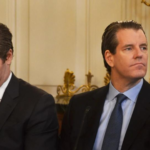
A recent investigation by The New York Times has prompted significant discussion around the identity of bitcoin’s elusive creator, Satoshi Nakamoto, pointing to British computer scientist Adam Back as a prime suspect. Back, who currently serves as the CEO of blockchain technology firm Blockstream, has swiftly refuted these claims. Speaking to Yahoo Finance, he provided insights into why the theory of his identity as Nakamoto is flawed.
Back expressed skepticism about the investigation’s findings, emphasizing that he believes Satoshi is likely someone who remains anonymous and does not engage with media inquiries or forums under their true name. He stated, “I think the most probable situation is that Satoshi is somebody who’s not talking to documentary film crews, to investigative journalists.”
The claims surrounding Back arose from a thorough 18-month exploration conducted by investigative journalist John Carreyrou, renowned for uncovering the fraud scandal involving Elizabeth Holmes and the failed blood-testing startup, Theranos. Carreyrou, collaborating with AI researcher Dylan Freedman, meticulously examined communications from three significant internet mailing lists spanning several decades. Their analysis employed artificial intelligence to compare writing styles, ultimately suggesting that Back’s correspondence resembled that of Nakamoto’s more closely than any other individual’s.
Throughout the investigation, notable parallels were drawn between Nakamoto and Back, including common writing habits such as placing two spaces between sentences, using British spellings, and similar hyphenation errors. Carreyrou expressed high confidence in his findings, stating on a New York Times podcast that he is “somewhere between 99.5% and 100%” certain he has identified bitcoin’s creator.
However, Back raised concerns about the methodology employed in the investigation, highlighting a potential element of confirmation bias. He pointed out that those involved in cryptography and programming—communities that overlap significantly—might share linguistic traits that could misleadingly suggest a connection. He remarked, “You are inherently selecting people who are interested in similar things… so of course, they’re going to sound similar.”
The investigation also noted intriguing connections between Back and Nakamoto, including Back’s absence from online conversations during key periods of Nakamoto’s active participation, as well as his re-emergence around the time Nakamoto withdrew from public view. Notably, Back was the first person to receive a direct email from Nakamoto months prior to the release of the bitcoin white paper.
Regardless of whether Back is indeed Nakamoto, he remains a significant figure in the realm of digital currency. His contributions to the industry have been invaluable, and they raise essential questions about the broader impact of this figure on the cryptocurrency landscape, which now boasts a market valuation of approximately $2.4 trillion, further solidifying Nakamoto’s near-mythical status.