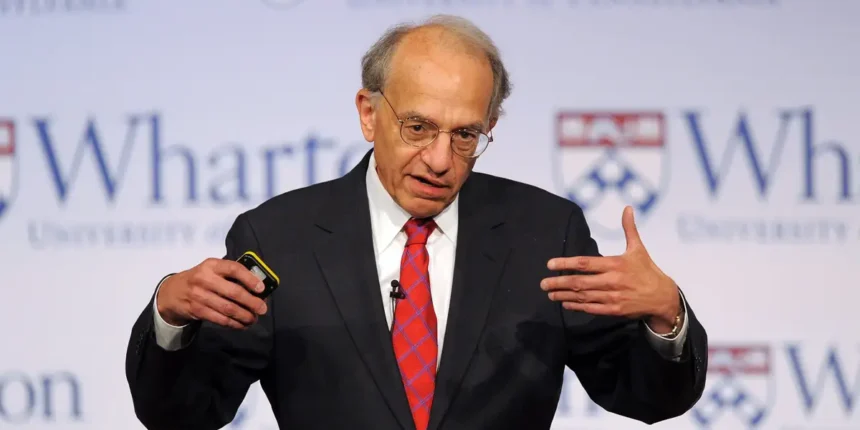
Investors may want to exercise caution and consider holding off on entering the stock market until the summer, according to Jeremy Siegel, an esteemed economist and finance professor at Wharton. Speaking to CNBC, Siegel expressed concerns over the near-term trajectory of the U.S. market, citing ongoing pressures stemming from the war in Iran.
Siegel noted that while there appears to be a potential resolution on the horizon, the conflict has already contributed to rising inflation, primarily through elevated oil prices. He stated, “I don’t think the short-term looks all that favorable, very honestly,” suggesting that patience may be prudent for investors at this moment. Instead of pursuing new equities, Siegel advocates for maintaining current positions, emphasizing the potential for a stagnant market over the next two to three months.
The current fluctuations in oil prices have prompted broader worries about their cascading effects on the economy. For instance, Delta Air Lines recently notified investors that it anticipates an additional $2 billion in fuel costs through June. Siegel raised a critical question regarding how the airline’s leadership plans to manage these costs: “The only way to cover that to keep earnings up is to raise fares.” He noted that while airline demand had been robust when oil prices hovered around $60 a barrel, the escalating costs could soon lead to diminished consumer demand—a phenomenon that other economists have warned could negatively impact economic growth.
Despite a brief rally in stocks following news of a ceasefire agreement involving the U.S., Israel, and Iran, oil prices remain high, with Brent crude near $95 a barrel—a 34% increase since the onset of the conflict. Siegel highlighted that this ongoing inflationary backdrop diminishes the likelihood of Federal Reserve rate cuts. He pointed out that the central bank is currently facing greater inflationary pressures compared to the period before the war, citing increases in consumer credit and the money supply.
As of February, total consumer credit had reached a record $5.1 trillion, and the M2 money supply also hit an all-time high of $22.6 trillion. Siegel predicted that the Federal Reserve would likely refrain from making any interest rate adjustments before the end of Chairman Jerome Powell’s term in May. However, he cautioned that an upward movement in rates may occur later this year, further steering away from the prospect of rate cuts in the immediate future.
In light of these challenges, Siegel advised investors to maintain liquidity, stating, “The Siegel family would hold the extra cash.” While he remains optimistic about the long-term prospects for U.S. stocks, he urges caution in the current market environment.