Investors are eagerly anticipating Wall Street’s growth trends for the future, especially following the market’s remarkable performance in recent years. With the Dow Jones Industrial Average, the S&P 500, and the tech-heavy Nasdaq Composite soaring to record highs, optimism is palpable. However, as investors reflect on the journeys of the past, they are also starting to turn their gaze towards what 2026 might hold for the equities market.
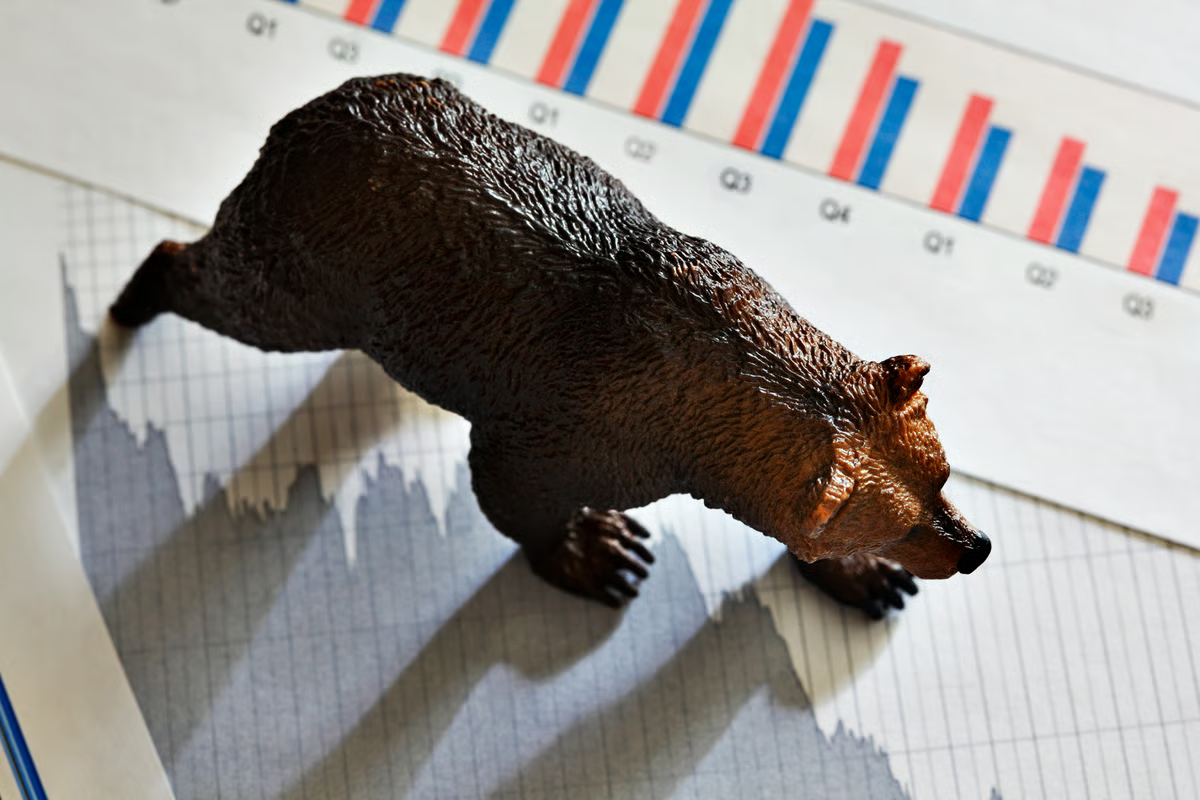
Early predictions suggest that all three major indices—the Dow, S&P 500, and Nasdaq—could face declines of at least 20% as they potentially enter a bear market. The current Shiller Price-to-Earnings Ratio indicates that the market is at one of its priciest valuations in 155 years, reminiscent of pre-burst conditions seen before the dot-com bubble. Historical patterns indicate that when such elevated P/E ratios have been recorded, significant downturns have typically followed, suggesting a repetitive cycle of market corrections could be ahead.
Moreover, the Federal Reserve, traditionally viewed as a stabilizing entity for Wall Street, faces increasing scrutiny. Recent dissenting opinions among Federal Open Market Committee (FOMC) members could signal a shift in the Fed’s influence on market stability. As unemployment rates climb to levels unseen in four years, the Fed’s capacity to effectively manage economic conditions is under question. This volatile dynamic suggests that the Federal Reserve may become more of a liability for investors.
With potential stagflation—a troubling blend of high inflation, rising unemployment, and stagnating economic growth—appearing increasingly likely, inflation rates continue to rise alongside unemployment, contributing to fears that this nightmare scenario could loom large in the coming year.
In the tech sector, the prevailing enthusiasm surrounding innovations such as quantum computing is expected to face a reckoning. As history suggests, bubbles typically form around disruptive technologies, only to burst when expectations outstrip reality. Companies like IonQ and Rigetti Computing currently boast astronomical price-to-sales ratios significantly above historical norms, marking them as candidates for a potential correction.
On a sectoral level, a shift might occur as consumer staples stocks emerge resilient against overvalued tech stocks. With an industry-average forward P/E ratio significantly lower than tech, defensive sectors may attract more investment as a safeguard against economic uncertainty.
Meta Platforms is poised for a notable year ahead, potentially initiating a stock split that could reward investors and enhance accessibility. With an immense user base and strong ad-pricing power, Meta is uniquely positioned to capitalize on this strategy, differentiating itself as a competitor in the market.
Nvidia, once a leader in the AI revolution, may see its market cap drop significantly as competitive pressures mount. Even as it finishes 2026 as one of the most valuable companies, internal rivalries from clients developing their own GPUs could squeeze its market share and threaten profitability.
The ramifications of trade policies, particularly those stemming from President Trump’s administration, could also complicate corporate earnings. Historical data indicates a trend of declining employment and profitability linked to tariffs, suggesting that businesses might increasingly use them as an excuse for underwhelming performance.
On a more encouraging note, share buyback activity is expected to soar, fueled by corporate strategies to optimize earnings per share amid challenging conditions. This practice tends to make stocks more appealing to investors, enhancing financial stability during turbulent times.
Lastly, all eyes will be on the IPO market, with predictions of a historic offering that could surpass previous records. Contrary to expectations that OpenAI might dominate this space, SpaceX is expected to stake its claim, potentially raising $30 billion or more as it targets a massive valuation.
As 2026 unfolds, investors will need to navigate these trends carefully while keeping an eye on historical lessons and adapting strategies to meet the evolving challenges and opportunities on Wall Street.