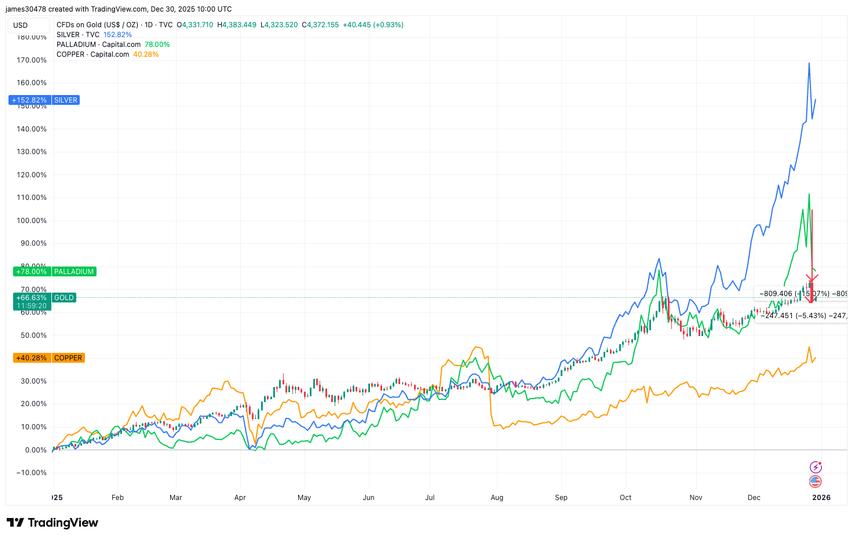
This year, investors have Showed a clear preference for precious metals, particularly gold, as a hedge against the potential decline in the value of fiat currency, effectively sidelining the performance of Bitcoin, which is currently priced at approximately $87,966.83. Since the beginning of the year, gold has surged nearly 70%, while silver has skyrocketed about 150%. In contrast, Bitcoin has experienced a decrease of around 6% during the same period.
Analysts have linked the rise of precious metals to what is known as the “debasement trade.” This investment strategy involves purchasing assets that are perceived to hold their value, particularly in an environment where fiat currencies are expected to devalue. The depreciation of these currencies can be attributed to ongoing ultra-loose monetary policies and growing fiscal deficits, which ultimately undermine purchasing power and escalate the value of alternative assets.
Earlier this year, bullish Bitcoin advocates made optimistic forecasts, asserting that the debasement trade would serve as a significant catalyst for price increases by year-end. However, Bitcoin’s momentum came to an abrupt halt in early October, peaking above $126,000 before retreating to below the $90,000 mark.
Gold’s impressive rally has drawn attention from technical analysts, particularly The Kobeissi Letter, which noted that gold has consistently remained above its 200-day simple moving average—a critical long-term trend indicator—for approximately 550 trading days. This impressive streak marks the second-longest in recorded history, trailing only behind the nearly 750-session period that followed the 2008 financial crisis.
Despite the pullback in Bitcoin’s price, cryptocurrency enthusiasts remain undeterred. Analysts in the space anticipate that Bitcoin will eventually align with gold’s performance in the coming year, as it has historically shown a tendency to lag behind its precious metal counterpart. “Gold has been leading BTC by roughly 26 weeks, and its consolidation last summer aligns with Bitcoin’s pause today,” noted Lewis Harland, a portfolio manager at Re7 Capital. “The metal’s renewed strength is indicative of a market increasingly anticipating further currency debasement and fiscal strain extending into 2026, which has consistently supported both assets, with Bitcoin historically responding with greater intensity.”
The predictions market also appears to reflect this sentiment, with traders on Polymarket assigning a 40% probability for Bitcoin to emerge as the top-performing asset next year, compared to 33% for gold and 25% for equities. This evolving narrative underscores the ongoing tug-of-war between cryptocurrencies and traditional safe-haven investments as economic conditions continue to fluctuate.