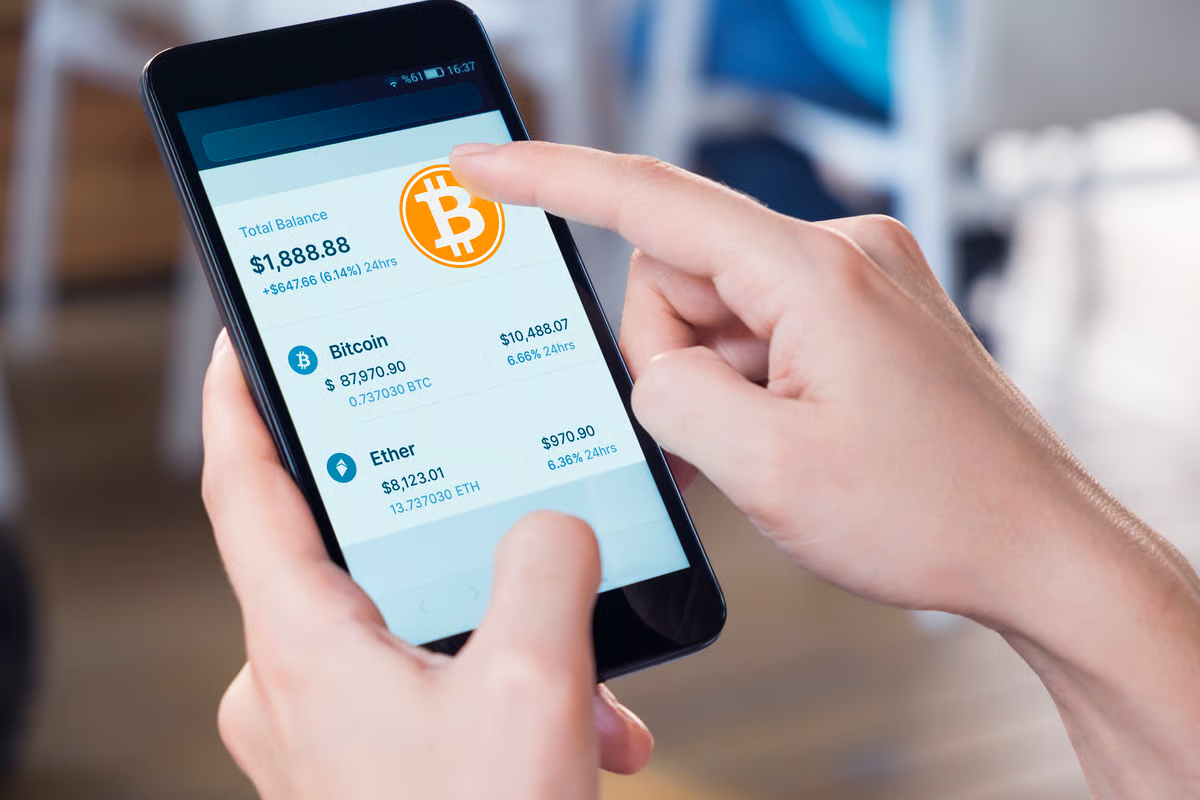
Investors are increasingly turning their attention to the cryptocurrency market, drawn by its potential for remarkable returns. Among the multitude of digital assets available, one cryptocurrency continues to stand out: Bitcoin. Over the past decade, Bitcoin has demonstrated an astonishing growth rate, surging nearly 23,000%. However, it is currently trading approximately 28% below its all-time high recorded last October, placing it in a bear market.
For those contemplating whether to enter or increase their holdings in this volatile market, the argument favors taking the plunge—especially given Bitcoin’s enduring dominance in the industry. As the original cryptocurrency, Bitcoin offers a unique first-mover advantage, which has bestowed it with unparalleled brand recognition. It’s likely that if you posed the question of which cryptocurrency comes to mind to a hundred random people, Bitcoin would be the clear winner.
With a market capitalization of around $1.8 trillion, Bitcoin benefits from deep liquidity and is steadily finding its way into the portfolios of investors as well as being used in transactions. The financial infrastructure surrounding Bitcoin is rapidly evolving, encompassing brokerage services, exchange-traded funds (ETFs), derivatives markets, and payment systems.
Adding to its strength is the robust network effect that Bitcoin has cultivated over the years. This ecosystem includes miners, nodes, and developers, all of whom contribute to the overall value proposition of the asset. The more stakeholders that are involved, the more formidable the competition becomes for any emerging cryptocurrencies looking to challenge Bitcoin’s supremacy. Currently, Bitcoin holds a staggering 59% market share of the entire cryptocurrency market, and projections from Ark Invest indicate that this figure could rise to as high as 70% by 2030.
Despite the plethora of alternative cryptocurrencies that have emerged, Bitcoin maintains its reign as the market leader. For investors, focusing on this top asset may be a strategic approach to navigating the complexities of the crypto space.
Bitcoin’s scarcity is also a pivotal feature that enhances its attractiveness as an investment. With a capped supply of 21 million bitcoins, this metric plays a critical role amid the ongoing devaluation of traditional fiat currencies. The stakeholder community is invested in upholding this cap, suggesting that significant changes to this limit would undermine the credibility of the entire network.
For current and prospective investors, now may be the time to consider acquiring Bitcoin, particularly as it sits at a lower price point. However, it’s essential to approach Bitcoin as a long-term investment. Ideally, Bitcoin should be held within a portfolio for a decade or longer to withstand the inherent volatility that the cryptocurrency market is known for. As the asset matures, that volatility is expected to decrease, potentially providing steadier returns for patient investors.