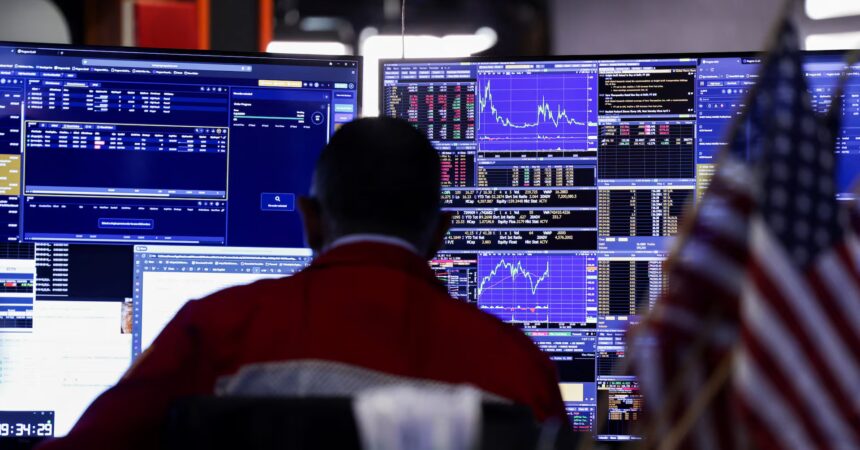
In a challenging landscape for global markets, recent developments have raised significant concerns about the future of stocks and banking stability. The current situation is exacerbated by elevated valuations, speculation regarding an artificial intelligence bubble, a stalemate in the U.S. government, and escalating tensions between Washington and Beijing.
Recent trading activity highlighted the precarious position of U.S. regional banks, particularly after alarming reports emerged from Zions Bancorporation, which saw its stock plunge by 13% following a disclosure of a $50 million loss tied to two loans in California. Western Alliance’s stock also took a hit, down 11%, prompted by a lawsuit alleging fraud against Cantor Group V, LLC.
These developments echo the tumultuous events following the collapse of Silicon Valley Bank in 2023, where an increase in interest rates led to substantial losses and a subsequent deposit run, impacting Signature Bank shortly thereafter. Investors are now wary of a potential repeat scenario, triggering sell-offs in bank stocks and a growing demand for interest rate cuts from the Federal Reserve.
In the broader market reaction, the MSCI index reflecting Asia-Pacific shares outside Japan fell by 0.9%, while Japan’s Nikkei dropped 1.1%, influenced by a downturn in the banking sector. Meanwhile, futures on Wall Street declined by 0.4%, and European stock futures fell by 0.8%, with FTSE futures tumbling 1%.
In a stark flight to safety, gold surged to a record high of $4,378.69 per ounce, marking an impressive weekly increase of 8.9%—the largest since the fallout from Lehman Brothers in September 2008. Treasury yields similarly rallied, with two-year Treasury yields hitting a three-year low of 3.3890%, as investors speculate that the Federal Reserve may need to implement two rate cuts by the end of the year, with some even anticipating a more aggressive 50 basis point reduction.
Though financial stability appears manageable at this point, prominent figures like Jamie Dimon remind investors of hidden risks, likening emerging issues in the banking sector to “seeing one cockroach,” suggesting that further problems might be lurking. Market participants remain hopeful that the Federal Reserve will intervene, despite current inflation levels sitting at 3%. They ponder the implications of potential changes in Fed leadership if former President Trump were to appoint new officials.
As the government remains shuttered, minimal economic data is expected to be released, but key events later in the day may still influence market dynamics, including speeches from Federal Reserve officials and upcoming earnings reports from major financial institutions such as American Express and State Street, alongside more regional banks.