European quantum computing startup IQM has announced its plans to become one of the first publicly listed companies in the quantum sector within Europe. The Helsinki-based company will merge with the special purpose acquisition company (SPAC) Real Asset Acquisition Corp (RAAQ) as part of this listing process, which is set to take place on the New York Stock Exchange. The deal is pending shareholder approval and fulfillment of regulatory conditions, with the company anticipating completion around June of this year, followed by the public offering.
IQM’s initial equity valuation has been set at approximately $1.8 billion, a significant milestone for the firm that showcases its rapid growth and potential within the competitive landscape of quantum computing. The company is also exploring a dual listing on the Helsinki stock exchange, further expanding its visibility and investment opportunities.
Founded in 2018, IQM has made considerable strides in fundraising, recently closing a Series B funding round that raised $320 million in September. This round was spearheaded by Ten Eleven Ventures, a U.S.-based venture capital firm focusing on cybersecurity, with participation from Finnish venture capital group Tesi. Following this funding, IQM’s valuation increased to around $1 billion, reflecting investor confidence in the company’s future.
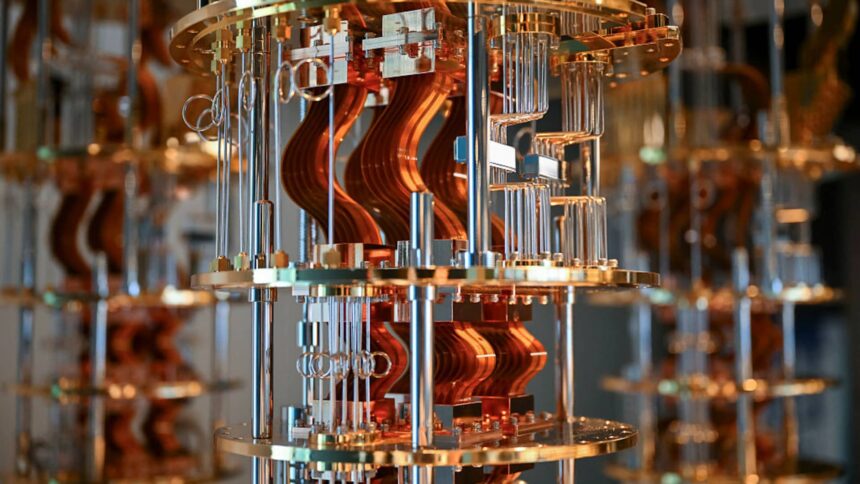
IQM specializes in developing full-stack, open-architecture quantum computing systems that can be utilized both on-premises and accessed via cloud technologies. The merger with RAAQ is expected to provide over $300 million in funding through private investment in public equity financing and cash reserves held in RAAQ’s trust account, assuming there are no major investor withdrawals from the transaction.
Quantum computing stands poised to revolutionize numerous sectors by executing complex calculations at speeds far surpassing those of classical computers. This technology has the potential to drive breakthroughs in areas like medicine, scientific research, and financial modeling. While the commercial deployment of quantum systems is still in its infancy, many analysts are optimistic about the advancements being made.
UBS analysts have noted that despite the technical challenges facing the industry, significant progress is being seen. “Quantum computing is a science project no more,” asserted Jan Goetz, cofounder and CEO of IQM, emphasizing the shift towards an industry where organizations actively own and operate sophisticated quantum computers. To date, IQM has sold 21 quantum systems to 13 customers, generating at least $35 million in unaudited revenue as of 2025.
As businesses begin targeting the integration of quantum technology into their data operations by the end of the decade, discussions about the future landscape of the quantum computing sector are becoming increasingly pertinent. Alongside IQM, other European players are also making their mark, including U.K.-based Quantinuum, which raised $800 million across two funding rounds, and Spain’s Multiverse Computing, which secured 189 million euros.
Amidst these developments, China remains at the forefront of international investment in quantum technology, allocating nearly $18 billion in public funds, closely followed by initiatives from the European Union, according to data from the European Centre for International Political Economy (ECIPE), underscoring the global race for dominance in the quantum computing arena.