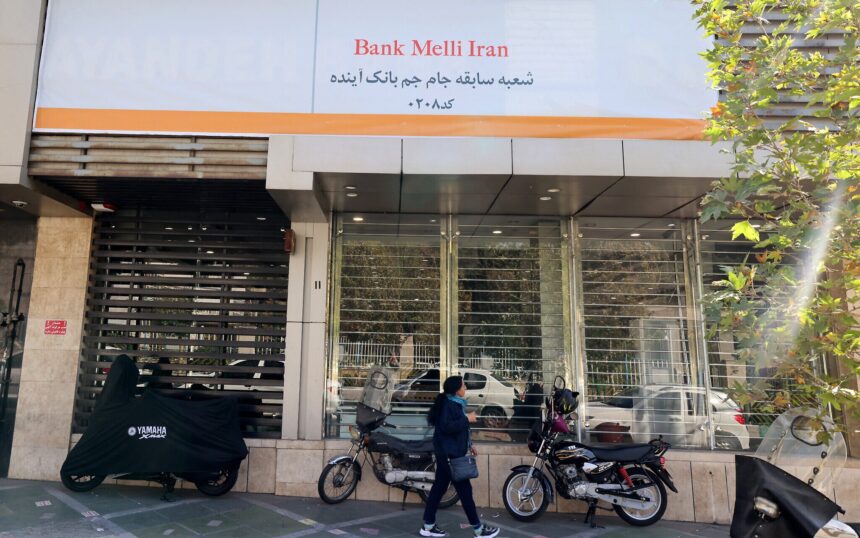
In a significant development for Iran’s banking sector, the Central Bank announced the bankruptcy of Ayandeh Bank, one of the nation’s largest private banks. Official media reported that the assets of Ayandeh Bank, which had been struggling under the weight of substantial debt and accumulated losses, were absorbed by Melli Bank, the state-owned banking giant. This decision comes at a time when Iran is grappling with the challenges posed by international sanctions.
Founded in 2012, Ayandeh Bank operated a network of 270 branches nationwide, including 150 in Tehran. Recent reports indicated that the bank faced severe financial difficulties, with losses amounting to approximately $5.2 billion and debts of around $2.9 billion. Customers lined up outside a former Ayandeh Bank branch in Tehran shortly after the announcement, some visibly anxious about the future of their deposits, prompting police presence to manage the situation.
Abolfazl Najarzadeh, director of Melli Bank, confirmed on state television that the transfer of Ayandeh Bank’s assets to Melli Bank had been completed and reassured the public that depositors would be able to recover their savings. Iranian Economy Minister Ali Madanizadeh echoed these sentiments, stating that customers had “nothing to worry about.”
Hamidreza Ghaniabadi, an official at the Central Bank of Iran, cited “bad debts” as a key factor behind the bank’s collapse. He revealed that over 90 percent of Ayandeh Bank’s funds had been allocated to related parties or internal projects, many of which were never repaid. Notably, Ayandeh Bank had financed lavish projects, including the massive Iran Mall shopping complex in Tehran, which features amenities like an ice rink and cinemas.
The broader context of this bankruptcy reflects the strain on Iran’s banking sector, as other institutions, including Sarmayeh, Day, Sepah, Iran Zamin, and Melal, are also reportedly facing similar financial challenges. The situation has been exacerbated by the reimposition of strict sanctions by the United Nations against Iran, which renewed a series of punitive measures initially lifted under a nuclear agreement in 2015. These sanctions re-emerged following tensions surrounding Iran’s nuclear program and military actions affecting Iranian facilities.
As the Iranian government navigates this financial crisis, the ability to stabilize its banking system and assure depositors will be crucial not only for economic recovery but also for maintaining public confidence amidst rising economic pressure brought about by sanctions and debt crises.