The ongoing conflict involving Iran has highlighted a significant disconnect between physical reality and the ability to manage public perception surrounding the situation. This disconnect has been particularly impactful on financial markets, which are witnessing unsettling shifts. The Nasdaq 100 index has recently dipped over 10% from its peak, officially entering a correction phase. Meanwhile, the S&P 500 has faced losses for five consecutive weeks, indicating its longest decline since 2022. Concurrently, oil prices have surged, with Brent crude nearing $111 per barrel and West Texas Intermediate (WTI) hovering around $97, threatening to breach the $100 mark.
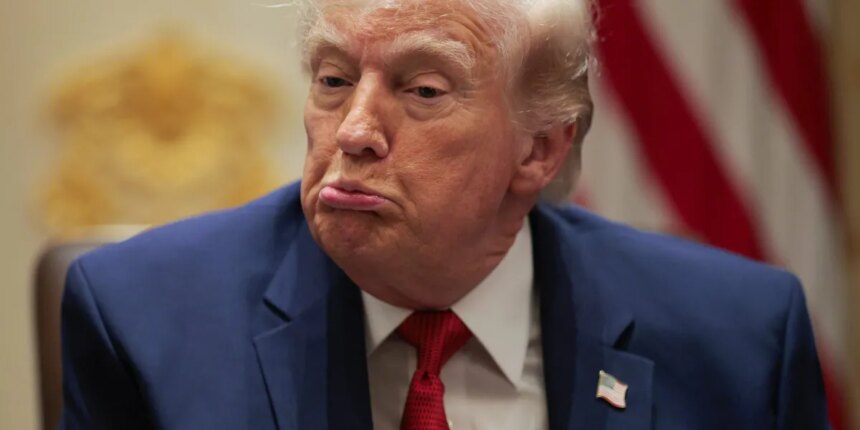
In a strategic move, former President Trump has once again delayed his deadline for potential strikes on Iran’s energy infrastructure by an additional 10 days, marking the second extension since he initially issued the warning the previous Saturday. Following market hours, Trump took to Truth Social to announce that “talks are ongoing,” perhaps in an effort to quell market fears surrounding a possible ground confrontation in Iran.
Despite these assertions, substantive dialogue between the two factions remains elusive. Iranian officials have publicly dismissed a U.S.-proposed 15-point ceasefire plan presented through intermediaries in Pakistan, countering with their own set of unrealistic demands, which includes sovereignty claims over the strategically significant Strait of Hormuz.
However, the anticipated “Truth Social effect” on oil prices has not materialized, as energy trader John Arnold noted that traders are growing weary of the uncertainty and have lost faith in the credibility of Trump’s statements. This sentiment appears to be mirrored within the White House, where senior aides have conveyed that Trump is becoming “a little bored” with the conflict. His focus is reportedly shifting towards the economy, domestic policy, and the upcoming midterm elections. Correspondingly, the administration’s communications have evolved to include odd social media posts and memes referencing popular culture, further signaling a shift in priorities.
The current dynamics of the conflict are intricate, as it requires both parties to step back from the brink of war. With significant losses already incurred—such as the assassination of Iran’s supreme leader and the decimation of military assets—Iran has vested interests in prolonging economic hardships to inflict further damage.
Despite the evident turmoil, markets had displayed resilience until Thursday, keeping oil prices relatively stable amidst the volatility. European Central Bank President Christine Lagarde cautioned that markets might be “overly optimistic” regarding the potential repercussions of the conflict, foreseeing shocks that could exceed current expectations. She pointed out that second-order effects on supply chains, such as potential helium shortages impacting semiconductor production, have not yet been fully integrated into market forecasts.
Conversely, some experts maintain a more optimistic outlook. Herbjørn Hansson, CEO of Nordic American Tankers, expressed confidence that the Strait of Hormuz would reopen within weeks, rather than months, predicting a swift recovery for trapped vessels. Apollo’s chief economist, Torsten Slok, stated that market reactions might be overblown, suggesting that the longer-term stability of oil markets would outweigh the short-term volatility induced by the Iran situation.
However, the conflict remains unpredictable, as evidenced by recent Iranian actions to divert two Chinese-owned container ships, part of Cosco Shipping, from the Strait of Hormuz. Initially, the blockade seemingly targeted vessels associated with the U.S. and Israel, raising concerns that China might be insulated from these disruptions. Yet, the recent incidents indicate an increasingly volatile atmosphere in the region, underscoring the challenges ahead for international shipping and trade.