







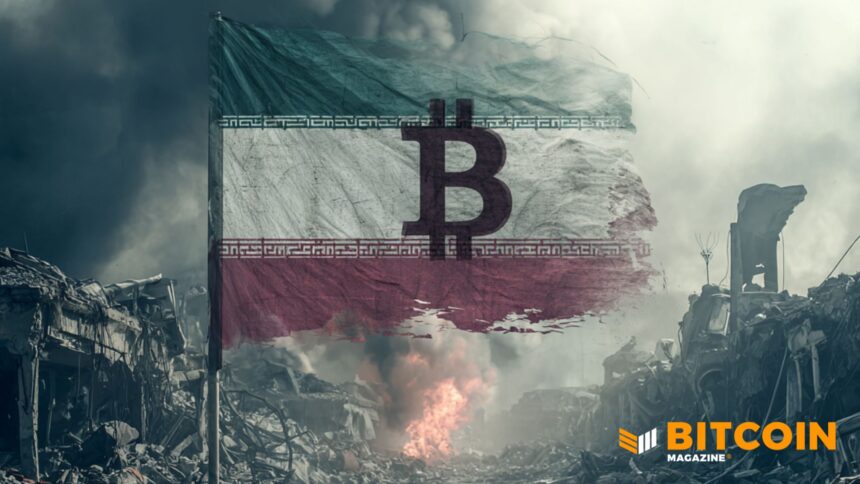
Iran’s national currency, the rial, has faced a catastrophic decline against the U.S. dollar, exacerbating the country’s ongoing economic crisis. Currently, the rial’s value is reported as virtually worthless, trading at around 1.4 million rials per U.S. dollar. This collapse has obliterated decades of purchasing power, contributing to widespread unrest among the population.
The depreciation of the rial has accelerated dramatically in recent months, with ongoing sanctions severely affecting the economy. Shrinking oil revenues and persistent political instability have driven both investors and ordinary citizens to abandon the rial, seeking alternatives that include the U.S. dollar and, increasingly, cryptocurrencies like Bitcoin.
As inflation skyrockets, everyday essentials such as food, medicine, and basic goods have seen significant price hikes, pushing families to allocate a larger portion of their incomes just to cover fundamental needs. While the official inflation rate surpassed 42% late last year, many citizens report that the actual costs of staples are even higher.
This economic hardship has ignited protests across major cities, including Tehran, Isfahan, and Shiraz. Demonstrators, ranging from bazaar merchants to students, have condemned the government’s economic mismanagement and political repression. In Tehran, even traditional supporters of the ruling clerics are expressing discontent as living conditions deteriorate.
In response to these protests, the Iranian government has imposed telecom blackouts and disrupted satellite communications, forcing citizens to find alternative means of communication. Innovative offline tools, including Bitcoin-focused apps like Bitchat and Noghteha, have emerged, allowing users to engage in secure messaging without internet access.
The increasing discontent and economic instability have elevated Bitcoin’s status within Iran. In a region where crypto adoption has been on the rise, many view Bitcoin as a potential hedge against unstable local currencies and the restrictive financial landscape. According to insights from blockchain analysis firm Chainalysis, Iranian-linked crypto services facilitated the transfer of over $4 billion out of the country in 2024, marking a substantial year-over-year increase. Centralized exchanges in Iran have experienced a surge in users attempting to convert rials into more stable assets.
Industry experts and analysts are framing Bitcoin not merely as a financial experiment but as an essential “exit option” for those fleeing traditional financial systems. They highlight Bitcoin’s finite supply and global liquidity as safeguards against inflationary pressures and external economic challenges.
However, significant hurdles remain. The Iranian government has instituted stringent regulations on digital finance, cracking down on unregistered mining operations and monitoring cryptocurrency platforms. These official restrictions often clash with the private behavior of Iranians, creating a climate of legal uncertainty for individuals seeking refuge in crypto as a secure financial haven.
In these turbulent times, Bitcoin has re-emerged as the resilient, borderless, and censorship-resistant tool it was designed to be, illustrating a growing need for alternatives in a rapidly shifting economic landscape.





