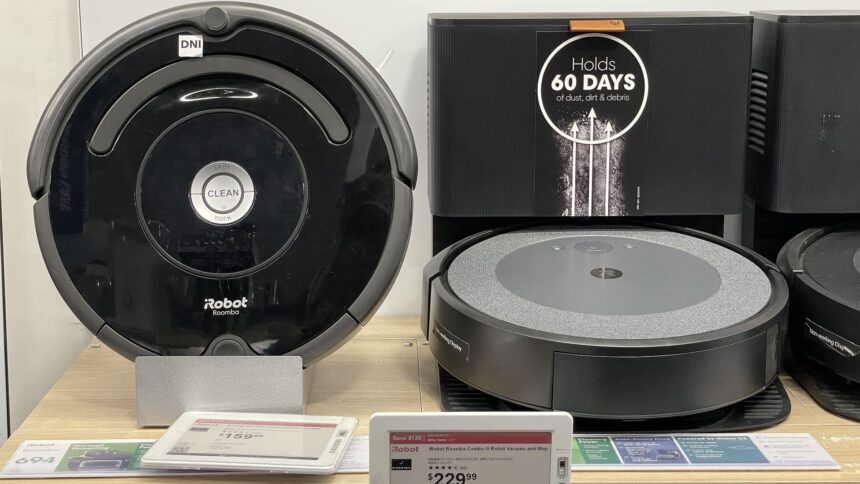
iRobot, the renowned creator of the Roomba vacuum cleaner, has taken a significant step by filing for Chapter 11 bankruptcy protection, announcing plans to transition into a private company following its acquisition by Picea Robotics, its main manufacturer. This decision, made public recently, comes amid growing concerns about the company’s financial viability and a challenging market landscape marked by fierce competition and evolving tariffs.
Despite generating approximately $682 million in revenue for 2024, iRobot has struggled to maintain profitability, primarily due to the influx of lower-priced alternatives from competitors such as Ecovacs Robotics. The company’s stronghold in key markets like the United States and Japan remains intact, but the relentless pressure to lower prices and invest significantly in technological advancements has taken a toll, as indicated in court filings related to the bankruptcy.
Compounding these challenges are recent U.S. tariffs, notably a staggering 46% levy on imports from Vietnam—where iRobot manufactures a significant portion of its products for the U.S. market. These tariffs have inflated the company’s operational costs by an estimated $23 million in 2025, further complicating their financial outlook and strategic planning.
iRobot’s financial woes have been exacerbated by a failed $1.4 billion acquisition attempt by Amazon.com. The company’s debt, which totals around $190 million, primarily stems from a refinancing loan obtained in 2023, coinciding with the investigation into competition concerns that ultimately derailed the Amazon deal. Following this setback, Picea Robotics acquired iRobot’s debt from investment funds managed by the Carlyle Group, further entrenching the relationship between the two firms.
Under iRobot’s proposed bankruptcy plan, Picea is set to acquire 100% of the company’s equity while simultaneously forgiving the outstanding $190 million loan from 2023, alongside an additional $74 million owed to Picea based on their manufacturing agreement. Additionally, iRobot has committed to ensuring that other creditors and suppliers will receive full payment.
The company has reassured stakeholders that its operational integrity will be maintained throughout the bankruptcy process. Customers can expect no disruptions to app functionality, customer programs, global partnerships, supply chain connections, or product support.
Once valued at $3.56 billion during a pandemic-driven market surge in 2021, iRobot now finds itself worth approximately $140 million, reflecting the drastic changes in its financial standing. Founded in 1990 by a trio of roboticists from the Massachusetts Institute of Technology, iRobot initially focused on defense and space projects before launching the Roomba robotic vacuum in 2002. The Roomba quickly became a household name, securing a commanding 42% share of the U.S. market and 65% of the Japanese market for robotic vacuum cleaners.
iRobot is based in Bedford, Massachusetts, and, according to court documents, employs 274 individuals. The future trajectory of the company will be closely watched as it navigates this challenging juncture in its storied history.