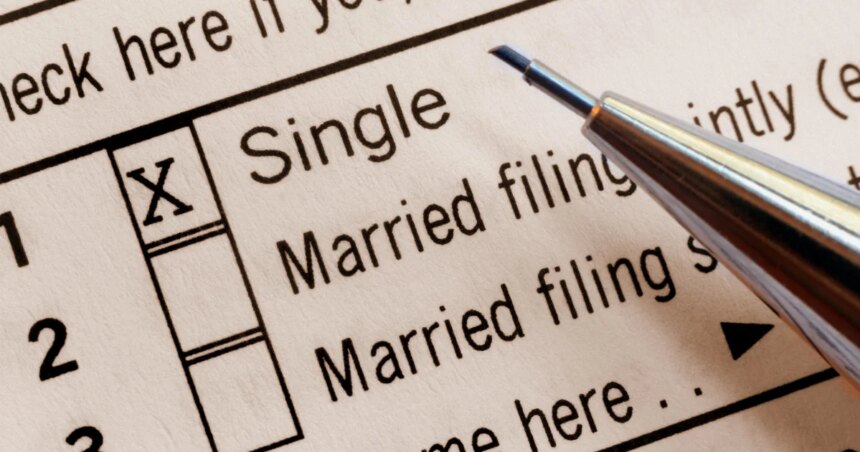
The Internal Revenue Service (IRS) is set to adjust federal income tax brackets for 2026 in response to inflation, providing potential relief for many taxpayers. These adjustments, which typically occur annually in the fall, aim to prevent “bracket creep,” a situation where inflation increases individuals’ incomes, pushing them into higher tax brackets and resulting in increased tax payments. As a result of these changes, Americans will have a higher income threshold before being taxed at a higher rate. For example, a single filer earning $50,000 will have a marginal tax rate of 12% in 2026, compared to a rate of 22% in the previous year.
In tandem with tax bracket adjustments, the IRS has also announced changes to standard deductions for 2026. The new figures are as follows: married couples filing jointly will receive a standard deduction of $32,200, while heads of households will have a deduction of $24,150. Single taxpayers and married individuals filing separately will benefit from a deduction of $16,100. Additionally, seniors may be able to access further tax relief through a provision in the One Big Beautiful Bill Act, allowing individuals aged 65 or older to claim a temporary tax deduction of up to $6,000. This deduction is limited to those with an income of $75,000 or less for singles and $150,000 or less for couples filing jointly, and it is set to expire at the end of 2028.
Compounding these developments, the IRS announced plans to initiate an agency-wide furlough beginning on October 8 due to a lapse in federal appropriations caused by the ongoing government shutdown. However, taxpayers who have an extension deadline of October 15 should continue to submit their tax returns as planned. IRS representatives emphasized that taxpayers should fulfill their federal income tax obligations as usual, as the furlough does not alter these responsibilities.
To help taxpayers understand their tax liabilities, it’s essential to clarify that the U.S. tax system is progressive. This means that individuals do not pay the highest tax rate on their entire income. Instead, income is taxed across different brackets—10%, 12%, 22%, 24%, 32%, 35%, and 37%—with increasing percentages applied to portions of income. For instance, a single taxpayer with a taxable income of $50,000 in 2026 would pay 10% on the first $12,400 and 12% on the remaining income.
Calculating one’s marginal tax bracket requires assessing the highest taxable income achieved. For example, a married couple earning $150,000 in gross income would first apply the 2026 standard deduction of $32,200, reducing their taxable income to $117,800. This would place them in the 22% bracket. However, their effective tax rate would be lower: they would pay 10% on the first $24,800 (amounting to $2,480), 12% on the income from $24,800 to $100,800 (totaling $9,120), and 22% on the income between $100,800 and $117,800 ($3,740). Overall, this couple would owe a total of $15,340 in federal income taxes, yielding an effective tax rate of approximately 13%.
As the tax landscape continues to evolve, these changes are expected to impact many taxpayers, offering a clearer understanding of their tax responsibilities and the potential for increased savings.