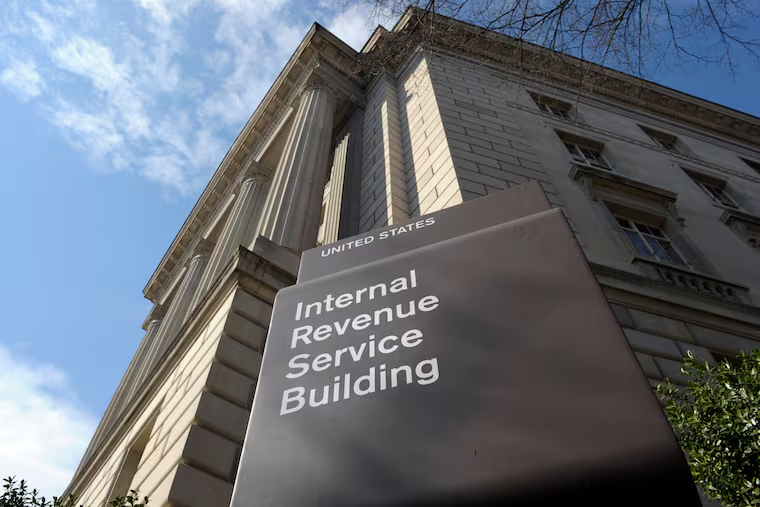
Recent changes to the tax law, prompted by the passage of 2025’s One Big Beautiful Bill, are set to impact taxpayers significantly this year through newly introduced deductions for tipped and overtime income. Treasury Secretary Scott Bessent announced that many working Americans didn’t adjust their withholding following the bill’s approval in July, resulting in expected tax refunds that could total between $100 billion and $150 billion. Households could see refunds ranging from $1,000 to $2,000 in the first quarter.
However, taxpayers should be cautious: a new Internal Revenue Service (IRS) regulation concerning tax returns requires individuals to provide bank account and routing numbers to ensure timely refunds via direct deposit. While the IRS will still process Form 1040 series returns without this information, refunds will be temporarily frozen until taxpayers submit their banking details or opt for a paper check. This rule highlights the importance of accuracy; if taxpayers provide incorrect banking information, their direct deposits will also be delayed until the issue is rectified.
Many taxpayers may not fully understand this change, according to tax adviser Mitchell Gerstein. He notes that while sharing bank details with the IRS may feel daunting, electronic payments have become the default process. For those hesitant to disclose their banking information, Philadelphia CPA Jacob Cohen warns that failing to do so could lead to significant processing delays. Refunds could take several weeks, if not longer, to be processed without the necessary bank account information.
Certain groups will remain unaffected by this new rule and will continue to receive paper checks as before. This includes international taxpayers, minors, prisoners, individuals with religious exceptions, and decedent taxpayers. However, the IRS plans to phase out the capability to receive paper checks in the coming years.
For individuals without traditional bank accounts, there are alternative solutions. The Treasury provides options such as prepaid debit cards and approved digital wallets like PayPal. Many reloadable prepaid cards, including NetSpend and Bluebird, offer routing and account numbers suitable for direct deposit. Taxpayers are advised to check with their mobile app provider or financial institution to clarify which details to utilize.
To facilitate access to banking, the IRS recommends finding a financial institution through resources such as the FDIC website or the National Credit Union Administration’s locator tool. Veterans also have access to the Veterans Benefits Banking Program (VBBP) for services through participating banks.
Those opting for digital management of their tax matters should consider setting up an online account with the IRS and registering on ID.me, which many government and private agencies use to manage tax information. This platform enables taxpayers to track their refund status, review tax documents, and explore payment options.
IRS guidelines state that typical refunds are processed within 21 days for electronically filed returns, while mailed returns may take six weeks or longer. Delays are likely if corrections are needed or if necessary bank information is absent. Taxpayers can utilize the “Where’s My Refund” tool for real-time updates on their returns.
Experts recognize the IRS’s push for electronic payments as a means to provide benefits such as faster and more secure refunds, as well as reduced instances of lost checks and immediate payment confirmations. Overall, accounting professionals advocate for setting up an IRS online account, ensuring the accuracy of bank details, and staying in communication with the IRS to navigate this new landscape smoothly.