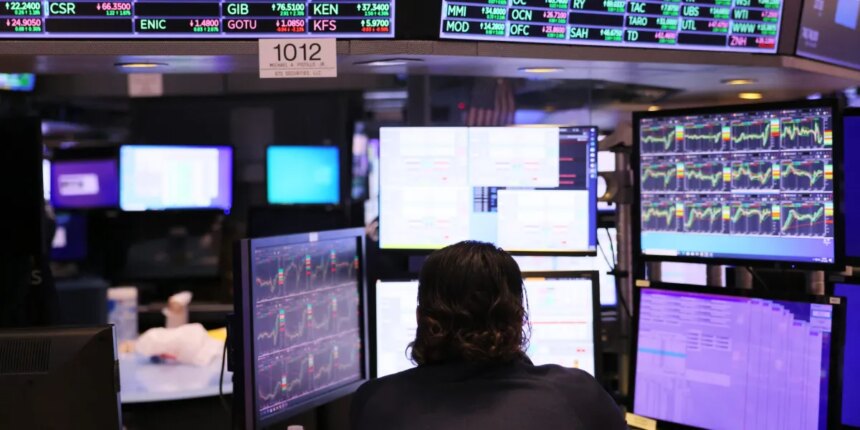
Concerns are mounting regarding the potential deflation of the AI bubble, as the S&P 500 has experienced declines over the last four trading days. Major investors, including prominent figures like Peter Thiel, have begun divesting from high-profile companies such as Nvidia. Sundar Pichai, CEO of Alphabet, has also acknowledged the existence of “irrationality” in the current market climate. However, it’s important to clarify that the AI bubble is a financial issue rather than a reflection of the technology itself. Misinterpreting this could lead to costly mistakes.
History has shown us the perils of conflating market dynamics with technological advancement, as demonstrated during the 2000 internet bubble. Following the collapse, the S&P index saw a staggering 49% decline over 31 months, leading many to dismiss the internet’s significance. In hindsight, the market faced a reckoning, but the technology itself continued to impact society profoundly.
As AI emerges as the next pivotal general-purpose technology, it is expected to facilitate even more extensive transformations than the internet did, independent of current market conditions. Business leaders are encouraged to disregard the current volatility in stock prices and to prepare their organizations for impending changes. A series of provocative questions have been posed to stimulate strategic thinking within companies:
-
When will your company’s AI be able to handle financial disbursements independently? Recent conversations during Fortune’s Emerging CFO program revealed that while executives are not yet comfortable allowing AI to manage funds autonomously, some foresee this capability within specific limits, particularly for low-risk transactions.
-
Are you ready for Artificial General Intelligence (AGI)? Though AGI is defined variably within the industry, it generally refers to an intelligence that surpasses human capabilities. Experts predict we might achieve AGI by the late 2020s to early 2030s, prompting leaders to reconsider how to manage organizations in a future where humans are no longer the top intellect.
-
When will the one-person billion-dollar company emerge? This question, highlighted by OpenAI CEO Sam Altman and colleagues, is less about if it will happen and more about the timeline. Organizations must contemplate how they would compete against such entities powered by sophisticated AI.
While these challenges may appear daunting, they are vital for future success. The evolution of technology will result in significant winners and losers, as cautious innovation will be crucial in navigating this new landscape.
In related news, a variety of significant developments have captured market attention. President Donald Trump recently hosted Saudi Crown Prince Mohammed bin Salman, reinforcing their relationship despite a backdrop of controversy involving a journalistic assassination. As Wall Street anticipates Nvidia’s earnings report, analysts are scrutinizing the economic viability of the AI sector amid fears of a market downturn.
Meta celebrated a pivotal legal victory, with a judge ruling that the company does not have a monopoly in the social networking space, thus avoiding the need to divest from Instagram and WhatsApp. Meanwhile, the U.K.’s FTSE 100 index is nearing a significant milestone, buoyed by robust performances from mining and utility stocks.
In technological advancements, Tsinghua University has positioned itself at the forefront of AI research, outpacing notable institutions in terms of published papers and patents, potentially reshaping the competitive landscape in the field.
Lastly, crypto exchange Kraken has successfully raised $200 million from Citadel Securities, achieving a valuation of $20 billion just months after another significant funding round.
As the markets navigate these tumultuous times, S&P 500 futures exhibit a slight uptick, while various global indices reflect mixed performances. The landscape remains uncertain but full of potential for those willing to adapt and innovate.