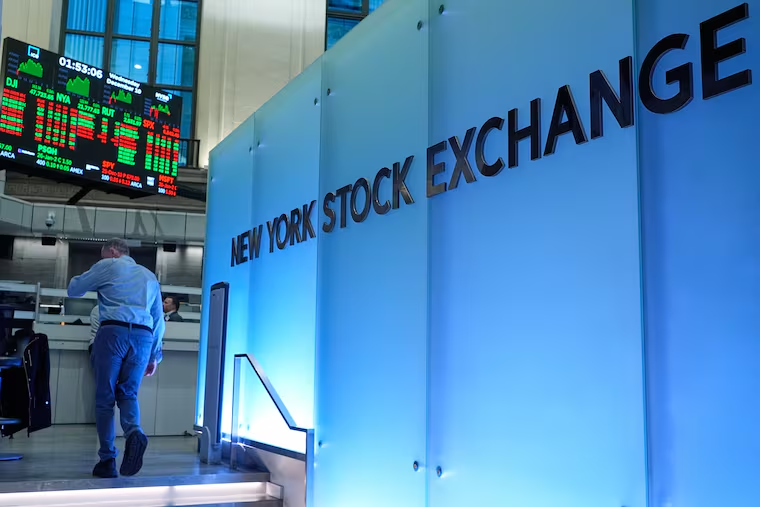
The stock market’s current surge raises intense debate regarding whether it represents a bubble, a concern especially pertinent to the approximately one-third of affluent Americans who own the majority of stocks. However, this issue also has implications for the broader economy, which ultimately affects a much larger portion of the population.
Stock prices have experienced remarkable growth, with values climbing sharply over the past decade—more than doubling since the COVID-19 pandemic began. Historical comparisons reveal that similar price escalations occurred in only three other decades since the late 1800s, specifically the 1920s, the 1950s, and the 1990s. The 1920s, which culminated in the infamous crash of 1929 leading to the Great Depression, is a classic example of a bubble. Conversely, the gains of the 1950s were grounded in the United States’ post-World War II economic dominance, featuring iconic corporations like General Electric and AT&T, thus not constituting a bubble.
In contrast, the 1990s internet boom was undoubtedly a bubble, as stock prices inflated dramatically in anticipation of the internet’s transformative potential, only to plummet after the turn of the millennium. Today’s scenario differs in some aspects. While the valuations of stocks are nearing those observed during the late 1990s, they aren’t quite as inflated as they once were. Currently, the ratio of the Wilshire 5000—reflecting the total value of publicly traded stocks—to corporate profits stands at an alarming 20-to-1, well above the historical average of 12-to-1. This only reinforces the notion of possible market overvaluation, given that the ratio spiked to 24-to-1 at the height of the previous tech bubble.
The ongoing excitement surrounding artificial intelligence companies, labeled as “hyperscalers,” may seem to justify these valuations. Unlike the speculative ventures of the past, these firms are seen as capable of driving substantial productivity gains. However, the current rapid stock price increases are also fueled by speculation from investors, many of whom believe that rising prices can only lead to further momentum, a self-perpetuating cycle.
Another element contributing to market behavior may stem from the prevalence of index funds that automatically reflect market indices such as the S&P 500. These funds amplify stock price movements without necessarily assessing the underlying company fundamentals. This condition creates a scenario where rising stock prices perpetually attract more investments, further inflating valuations. The stock of AI-chip manufacturer Nvidia, which has surged significantly, exemplifies this phenomenon where significant price increases draw additional investment simply due to a favorable trajectory.
While the escalating stock market has bolstered the wealth of the affluent class, leading to an increase in consumer spending and job creation, it also presents a significant risk. Should this market prove to be a bubble—and burst—there would be a swift decline in consumer spending, mirroring the consequences experienced post-Y2K. The dramatic loss in stock wealth could trigger a substantial economic downturn.
As the narrative surrounding the stock market continues to evolve, the lingering question remains: Is the stock market a bubble? If the current trends persist without correction, it could soon become one. The sentiment often shifts as dissenters are gradually sidelined, their skepticism dismissed as the bubble inflates. For now, however, there are still voices expressing caution, challenging the prevailing optimism about market conditions.