In a dramatic and unprecedented escalation of military tension, the early hours of June 13 saw over 200 Israeli fighter jets launching a comprehensive aerial strike against Iran, marking the beginning of a 12-day conflict that resulted in significant casualties. The light of the bombardments illuminated the Tehran skyline, signaling a new phase in Middle Eastern hostilities.
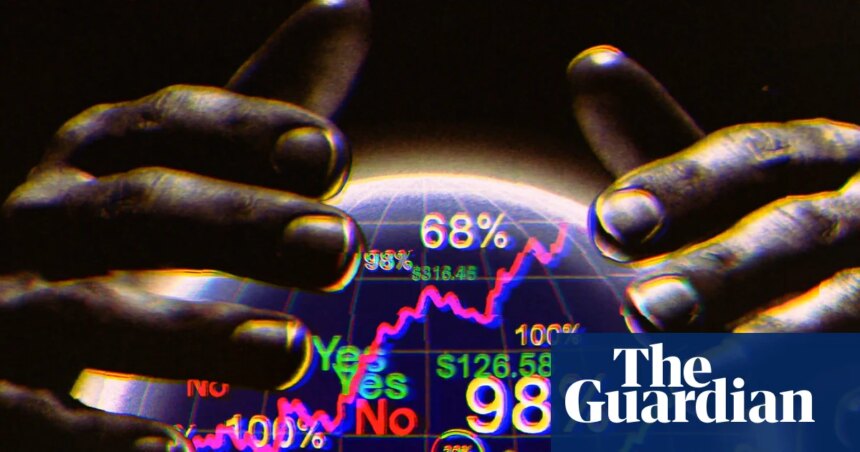
Interestingly, amidst this chaos, a user on the prediction market platform Polymarket experienced a fortuitous windfall. In the 24 hours leading up to the military action, this individual wagered tens of thousands of dollars on the unlikely event of an Israeli military action against Iran, at a time when market probability was lingering around 10%. Following the strike, Polymarket confirmed the occurrence of military action, resulting in a payout of $128,000 to the user for their prescient bet.
Polymarket allows users to bet on a variety of events, from entertainment to political outcomes. Despite being banned in the U.S. under the Biden administration, the platform is still accessible through VPNs, with the current betting volume exceeding $100 million daily. The lucky user, identified by an X account linked to Beit Ha’shita, a kibbutz in northern Israel, has since posted additional successful bets on events related to Israel’s military strategy, accumulating profits exceeding $28,000.
Officials have since launched an investigation into this user, given the unusual nature of their betting patterns. Unlike traditional sports betting platforms that require identity verification, Polymarket operates on a decentralized blockchain framework, making it challenging to trace users back to individual identities, while still allowing for public scrutiny of transactions.
The rise of online prediction markets has gained traction in recent years, particularly following the Supreme Court ruling legalizing sports betting in 2018. As the 2024 U.S. presidential election approached, interest surged, further fueled by high-profile social media influencers and commentators who highlighted the profitability of betting on political events.
Each wager on Polymarket is made through event contracts priced between $0 and $1, which are indicative of the likelihood of an event occurring. The contracts change in value commensurate with the event’s outcome, rewarding correct predictions with significant payouts. Supporters of Polymarket argue that these markets provide more nuanced and timely insights than traditional polls, with the platform being characterized as an innovative form of journalism.
Polymarket, described by its CEO Shayne Coplan as a rapid news resource, has previously outperformed traditional media predictions, calling several significant political outcomes with impressive accuracy. However, the platform faces scrutiny over potential insider trading, particularly after notable profits were made by users on events with limited public knowledge.
Several instances of suspicious betting behavior have sparked concerns regarding insider knowledge. For example, prior to the U.S. capture of Venezuelan leader Nicolás Maduro, a Polymarket account profited $400,000 on bets predicting Maduro’s ousting, made shortly before the news broke. Investigative efforts uncovered other accounts making similarly timed bets on politically charged events.
The existence of these potentially insider accounts raises ethical concerns about the integrity of knowledge within the markets. With big profits generated around significant national and international events, critics warn of the risks of distorting public information and potentially influencing political outcomes.
The recent discussion around regulatory frameworks emphasizes the ambiguity surrounding the legality of insider trading in prediction markets. While some competitors, like Kalshi, have established prohibitions against insider betting, Polymarket’s decentralized structure complicates regulatory oversight.
In light of these developments, proposals such as the Public Integrity in Financial Prediction Markets Act have been introduced to prevent government officials from trading based on nonpublic information, showcasing an increasing recognition of the potential conflicts entailed within prediction markets.
With burgeoning volumes of bets and a continuously expanding array of markets, the future of prediction markets remains uncertain, stirring debates about their influence on public events and regulatory measures that may be required to ensure fairness and transparency in these burgeoning platforms.