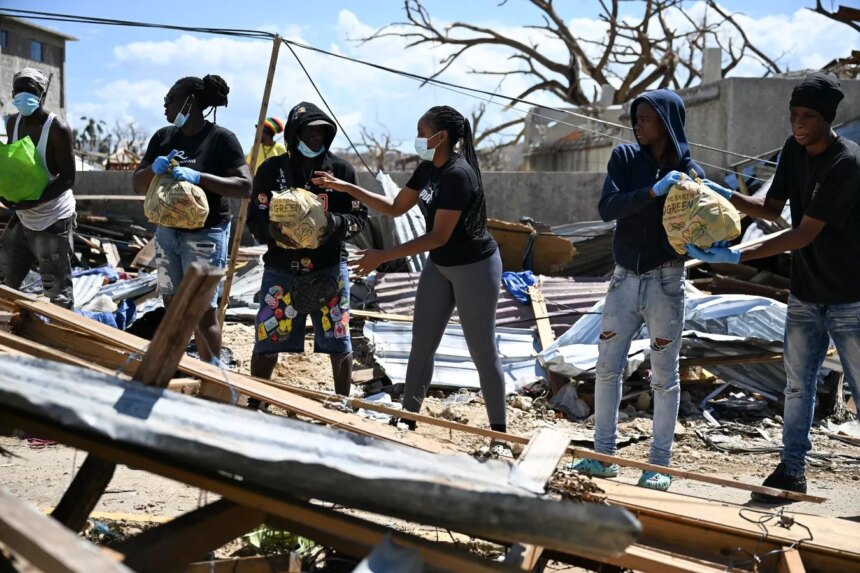
Residents of the Whitehouse community in Westmoreland, Jamaica, rallied together recently to aid in the distribution of emergency food supplies following the destruction wrought by Hurricane Melissa. As efforts unfolded in the aftermath, a groundbreaking digital payment solution, Flash, emerged as a vital resource for fundraising, purchasing essential items, and facilitating the flow of aid to victims of the storm.
Created by Jamaican entrepreneur Jabari Ennis, known in Bitcoin circles as “Dread,” Flash was developed to tackle the challenges of making digital payments in Jamaica. Since the storm struck last month, however, the app has proven indispensable in emergency relief efforts. “The Caribbean sees hurricanes like this every year, and our need for agile and resilient payment systems during disasters is critical,” Ennis commented, emphasizing the significance of having robust digital financial tools in place.
Ennis quickly activated a fundraising campaign through the app in the wake of Hurricane Melissa. Within the first 72 hours, the initiative had successfully raised over $10,000 in Bitcoin, a figure that has since grown to more than $15,000. These funds have been instrumental in procuring essential supplies such as water purification tablets, food staples like rice and beans, and other necessities for those affected by the hurricane.
The operational agility afforded by Bitcoin has set Ennis’s efforts apart from traditional aid organizations, which have often faced criticism for their slow response times. “With Bitcoin, we were able to mobilize volunteers on the ground from day one,” Ennis noted. The Flash app facilitates the conversion of Bitcoin into fiat currency, enabling quick purchases of relief supplies, ranging from food to hygiene products.
Acting as a comprehensive digital payment platform, Flash allows users to make seamless transactions over the Lightning Network, a layer designed to ensure rapid and cost-efficient payments. The app also uniquely supports transactions in a synthetic version of the U.S. dollar, easing concerns for users regarding currency fluctuations. This feature sets Flash apart, particularly in a country where traditional banking systems can pose hurdles for cryptocurrency users.
Ennis, who began his journey into the world of Bitcoin in 2018 while working as a software developer in the U.S., has long sought to improve Jamaica’s digital financial landscape. He learned from the successful Bitcoin circular economy in El Salvador and returned with a vision to establish a supportive infrastructure back home.
“Over 77% of Jamaicans have bank accounts, but only 30% frequently use them for digital payments due to inconvenience and fees,” he explained. Many local merchants continue to operate on a cash-only basis, which highlights the necessity of a reliable and streamlined payment “on-ramp.”
Feedback from early users of Flash underscores the app’s potential to simplify transactions. Philip Graci, founder of a production company in Jamaica, shared how Flash enables his business to avoid hefty wire transfer fees for cross-border payments. He plans to install merchant terminals powered by Flash at his events, further integrating the app into local economic transactions.
As the team works tirelessly to deliver aid, Ennis mentioned that the original timeline for launching Flash out of beta has been postponed due to the pressing need for relief efforts. “We are focused on getting as many supplies to those affected and onboarding as many businesses as possible to facilitate this process,” he stated.
The devastating impact of Hurricane Melissa has indeed reinforced the role of Bitcoin as an alternative and resilient monetary network for emergency scenarios. Ennis affirmed, “This is a moment that highlights the significance of having an open and effective financial system in operation during crises.” The unity among residents and the rise of digital tools like Flash represent a hopeful path toward recovery in the face of adversity.