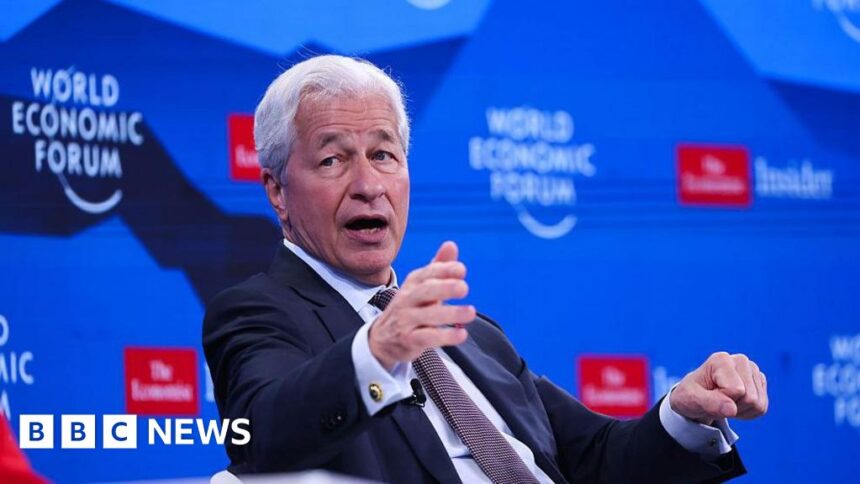
In a recent statement, JPMorgan Chase CEO Jamie Dimon expressed grave concerns regarding a proposal from former President Donald Trump to impose a cap on credit card interest rates at 10%. Dimon characterized the initiative as “an economic disaster,” suggesting that it could severely restrict access to credit for a large portion of the American population, potentially affecting approximately 80% of individuals who rely on credit cards as a financial safety net.
Trump, who made the announcement via Truth Social, proposed the cap to be effective for one year starting January 20, 2026. However, details on the implementation and legal feasibility of such a measure remain unclear. During the World Economic Forum in Davos, Dimon articulated his concerns, highlighting that the repercussions of such a drastic cap would extend beyond financial institutions, negatively impacting restaurants, retailers, travel companies, and educational institutions. He emphasized that these sectors would feel the most significant strain, particularly if consumers are unable to manage regular payments, including essential services like water.
In a pointed remark directed at Senators Bernie Sanders and Elizabeth Warren—who have advocated for similar measures—Dimon suggested that if the cap were to be enacted, it should be tested in their home states of Vermont and Massachusetts, hinting at the futility of such policies.
Trump reaffirmed his position on the matter during an interview with CNBC, stating that he has received feedback from credit card companies, many of whom he claims are personal friends. He acknowledged their profitability but argued that they should “give people a break.”
Opposition to the cap has also surfaced from U.S. banking associations, which argue that limiting interest rates would impede access to credit and have devastating effects on families and small businesses alike. The current average interest rate for credit cards in the U.S. hovers around 20%, making the proposed limit a significant departure from existing practices.
Trump’s call for a capped interest rate is part of his broader campaign platform for the 2024 presidential election, reinforcing his stance against what he perceives as exploitation by credit card companies. Following his announcement, stocks for credit card giants—such as American Express, Visa, and Mastercard—reacted negatively, indicating investor unease regarding the potential ramifications of the proposal.
With ongoing discussions around the viability of this plan, the future of credit card interest rates remains uncertain, embodying a contentious intersection of economic policy and political rhetoric.