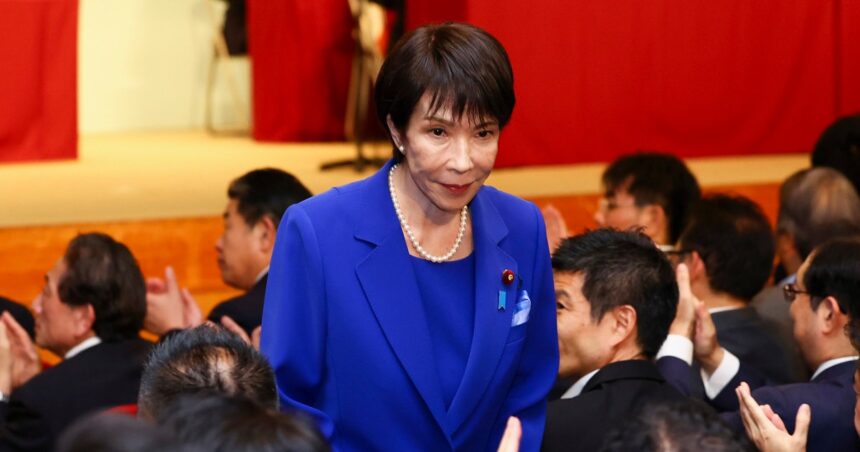
In a significant development for Japan’s predominantly male political landscape, Sanae Takaichi has been elected as the first female president of the long-ruling Liberal Democratic Party (LDP). At 64, Takaichi, who has previously served in key positions such as minister of economic security and minister of internal affairs, is poised to become the country’s next prime minister. Widely regarded as an ultra-conservative, she has been associated with the traditional views espoused by former Prime Minister Shinzo Abe and is known to admire Margaret Thatcher.
Despite her historic election, Takaichi’s campaign largely sidestepped discussions about gender equality, a pressing issue in a nation that consistently ranks low on international gender metrics. In a brief statement after her election, she remarked, “Now that the LDP has its first female president, its scenery will change a little,” hinting at a potential shift, albeit subtle, within the party.
While her election may symbolize progress, female lawmakers within the LDP have faced significant challenges. Those advocating for diversity and gender equality often encounter resistance and are marginalized after raising such issues. Observers note that Takaichi’s adherence to conservative ideologies might limit her effectiveness in promoting gender advancement, as she will likely need to navigate the influence of powerful male party figures.
Takaichi has characterized herself as a workaholic, expressing a willingness to forgo work-life balance in favor of intense dedication to her responsibilities. In her inaugural address, she urged party lawmakers to “work like a horse” and emphasized her commitment to hard work, a sentiment that elicited a mix of support and concern on social media regarding employee well-being.
The representation of women in Japan’s political sphere remains dismal, with women making up only about 15% of the lower house of parliament. Additionally, only two of Japan’s 47 prefectural governors are women, underscoring the systemic barriers that persist in the country.
Known for her unconventional hobbies such as playing drums in a heavy-metal band and motorbike riding, Takaichi’s political platform includes advocating for a stronger military, increased fiscal spending, nuclear fusion promotion, and stricter immigration policies. Moreover, she has pledged to increase the number of female ministers in her government, although experts caution that her leadership may ultimately hinder women’s progress. Her need to maintain loyalty to established male leaders could stifle potential reforms in favor of advancing gender equality.
Her views on women’s roles revolve around traditional expectations, where she supports financial assistance for women’s health and fertility treatments but stresses that women should embrace their roles as mothers and wives. This is juxtaposed against her recent acknowledgment of menopausal challenges, advocating for male education on women’s health issues as a means to enhance support in workplaces.
Takaichi’s controversial positions extend to favoring a male-only imperial succession, opposing same-sex marriage, and resisting revisions to 19th-century civil laws allowing couples to maintain separate surnames. Her wartime history revisionism and hardline stance towards neighboring countries, particularly China and South Korea, pose additional challenges for her leadership. While she seeks to maintain the LDP’s coalition with the moderate Komeito party, her openness to align with far-right factions raises eyebrows about the future political landscape in Japan.
As Takaichi settles into her new role, the political trajectory of Japan may be dictated by her ability to balance traditional conservative values with the pressing need for gender reform and international diplomacy, all while navigating the challenges posed by her own party’s entrenched ideologies.