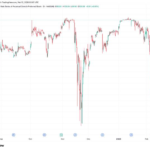
Japan’s Nikkei 225 index soared to a historic high of 58,000 on Thursday, marking a significant milestone in the nation’s financial landscape. This surge extends the index’s post-election rally, reflecting a robust resurgence of confidence in domestic politics and the economic strategies of the ruling administration. While the index later moderated its gains, trading at 57,663, the broader Topix recorded an increase of 0.68%.
Market analysts are attributing this upward momentum to the so-called “Takaichi trade,” driven by Prime Minister Sanae Takaichi’s decisive victory in the recent Lower House elections. Investment firm GMO emphasized that Takaichi now possesses a powerful, multi-year mandate, a circumstance they believe will bolster Japan’s markets and support corporate growth.
Despite the rally in equities, there are rising concerns among bond investors regarding potential intervention in the foreign exchange market, especially if the yen approaches the 160 mark against the U.S. dollar. This situation suggests a delicate balance between market confidence and the need for intervention to stabilize the currency.
Across Asia, other markets have demonstrated resilience against a backdrop of mixed international economic data. South Korea’s Kospi index reached a record high of 5,466.9 points, climbing as much as 2.1% before settling at a 1.82% increase. Singapore’s benchmark index also made headlines by crossing the 5,000 threshold for the first time. Meanwhile, Australia’s S&P/ASX 200 recorded a gain of 0.42% in early trading. In contrast, Hong Kong’s Hang Seng Index dipped by 0.23%, whereas mainland China’s CSI 300 managed a slight gain of 0.12%.
In the United States, the Dow Jones Industrial Average halted a three-day winning streak, concluding the day down 66.74 points, or 0.13%, finishing at 50,121.40. The S&P 500 remained nearly unchanged at 6,941.47, while the Nasdaq Composite declined by 0.16% to close at 23,066.47. This fluctuation followed a stronger-than-expected jobs report from the Bureau of Labor Statistics, which indicated a job growth of 130,000 in January—significantly higher than the anticipated increase of 55,000. In addition, the previous month’s job growth was revised downward, showcasing the dichotomy of the labor market’s strength amid softer consumer spending data from December.
The strength of the job market, it seems, has tempered expectations for imminent interest rate cuts by the Federal Reserve, highlighting a complex economic landscape where optimism about growth coexists with caution over inflationary pressures and monetary policy adjustments.