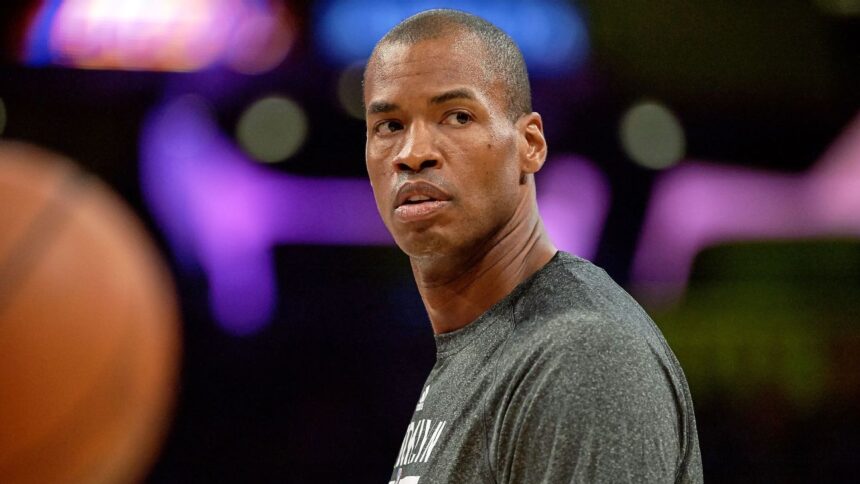
Jason Collins, a former NBA player known for breaking barriers as the first active, openly gay player in league history, has shared his deeply personal battle against Stage 4 glioblastoma, a highly aggressive form of brain cancer. The 13-year veteran, who played for multiple teams, revealed the severity of his diagnosis following a brief statement released by his family a few months prior.
Collins recounted experiencing puzzling symptoms in the weeks leading up to his diagnosis. Initially chalking the symptoms up to fatigue, he faced a staggering turn of events shortly after marrying his partner, Brunson Green, in May. What was supposed to be a routine trip to the US Open quickly turned into a life-altering moment when Collins found himself unable to pack for the trip.
A quick scan at UCLA confirmed the worst. A CT technician’s urgent request for further evaluation highlighted a critical situation. Soon after, family members witnessed a rapid decline in Collins’ mental faculties. “Over the next few weeks, we would find out just how bad it was,” he noted, explaining how glioblastoma’s aggressive nature complicates treatment due to its growth within the confines of the skull, particularly affecting the frontal lobe.
The diagnosis shocked Collins and his loved ones, revealing a tumor with a severe growth factor and a butterfly shape, indicating it was already spreading across both hemispheres of his brain. He likened his condition to the mythological Hydra, a creature that grows additional heads when one is cut off, referencing the tumor’s aggressive mutations that make treatment even more challenging.
While grappling with the harsh realities of his diagnosis, Collins also acknowledged the strength of his support system. He had shared his coming-out story in 2013 with trusted friends and family, and now they were by his side as he faced this new battle. He emphasized the importance of openly discussing cancer, a stark contrast to his grandmother, who disliked even mentioning the word during her own fight against the illness. Collins expressed determination in facing his diagnosis head-on, recalling that his grandmother had outlived her prognosis and instilled the belief in him that he, too, could defy expectations.
During a particularly vulnerable time in the hospital, Collins’ husband and family were researching treatment options, ultimately leading to the decision for Collins to undergo treatment with Avastin, followed by radiation. Remarkably, he began to regain some clarity and mobility shortly after starting treatment, enabling him to resume activities like short walks and reconnect with loved ones via his phone.
Determined not to succumb silently, Collins is actively engaging in his treatment journey. He is receiving targeted therapies in Singapore, which utilize advanced delivery systems to administer chemotherapy directly to the tumor, bypassing the blood-brain barrier. He remains hopeful that these pioneering treatments could not only prolong his life but may also contribute to future advancements in glioblastoma care.
Collins reflected on his life and the importance of authenticity, stating that being true to oneself has made his life infinitely richer. He draws strength from the lessons he learned as an athlete, viewing this health crisis as a challenge to face with tenacity and courage, much like going up against a formidable opponent on the basketball court. As he continues to fight, Collins remains focused not just on his own survival but on the potential impact his journey may have on others facing similar challenges in the future.