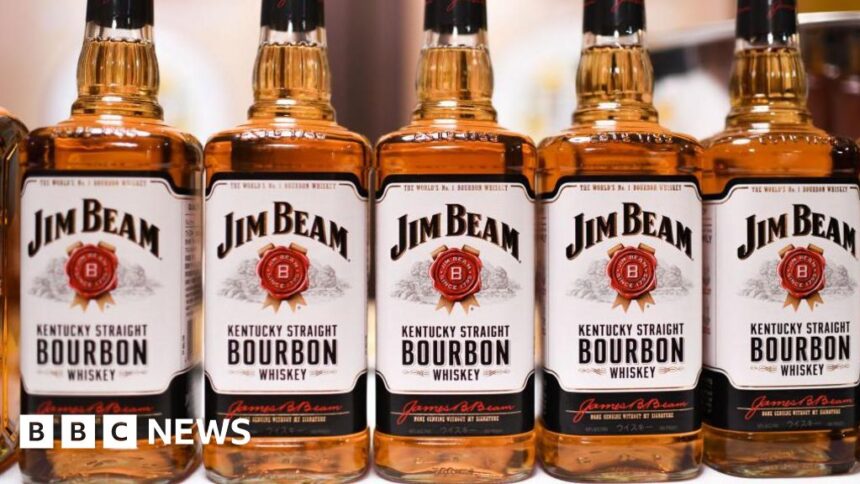
The renowned producer of Jim Beam bourbon whiskey has announced a significant operational change, revealing plans to halt production at its main distillery in Kentucky for the entirety of next year. This pause in manufacturing is part of a strategic effort to invest in enhancements at the site, as stated by the company in a recent announcement to the BBC.
The company explained that it is continuously evaluating production levels to align with consumer demand. Recent discussions among the team focused on the production volumes expected for 2026, highlighting a proactive approach to managing resources.
Kentucky distillers, known for their bourbon production, are currently navigating a landscape filled with uncertainties, largely influenced by former President Donald Trump’s trade policies. The Jim Beam brand falls under the ownership of Suntory Global Spirits, a Japanese beverage giant that employs over 1,000 workers across its Kentucky operations. While the main distillery will be closed, other facilities in the state, including a separate distillery and various bottling and warehousing plants, will continue to operate. The visitor center in Kentucky will also remain open to tourists and whiskey enthusiasts.
To address the workforce implications of this production pause, Jim Beam is engaging in discussions with its employees and the workers’ union to determine the best course of action during this timeframe.
In related news, the Kentucky Distillers’ Association (KDA) revealed that bourbon inventories across the state have reached an unprecedented level, with over 16 million barrels currently stored. The organization noted that these barrels, which carry state taxes, have resulted in significant burdens on distillers, costing them approximately $75 million this year alone.
For US distillers, the landscape has been further complicated due to retaliatory import taxes imposed after the implementation of tariffs on various goods by the US, including spirits. The KDA emphasized that much of the growth within the industry over the past decade has been oriented toward global markets, calling for a prompt return to reciprocal, tariff-free trade.
Furthermore, trade tensions with Canada have adversely affected the sales of American liquors, with numerous Canadian provinces having initiated boycotts against US spirits earlier in the year. This development adds another layer of complexity to the operational strategies of distillers in Kentucky as they maneuver through an evolving trade environment.