



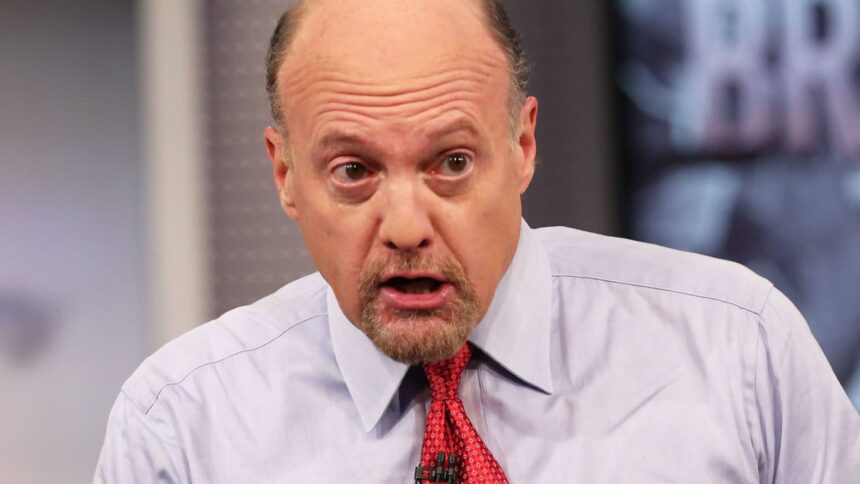
On Monday, CNBC’s Jim Cramer addressed concerns regarding the potential government shutdown, suggesting that it may not significantly impact the stock market. Cramer highlighted the historical performance of stocks during previous shutdowns, indicating that investors should “keep calm and carry on.” He stated that the market has often fared well in such scenarios.
Current predictions indicate that there is approximately a 70% likelihood of a government shutdown occurring on Wednesday, primarily due to ongoing disagreements among Congressional members over a stopgap funding bill. Democrats are advocating for the inclusion of protections for Obamacare health insurance subsidies, while Republicans are pushing to defer that discussion until after avoiding a shutdown.
While acknowledging the discomfort surrounding a shutdown—especially as this would mark the first full shutdown since 2013—Cramer emphasized that markets have even gained ground after two of the last three full shutdowns. He referenced research from analysts at Bank of America, noting that a clear trend in stock behavior during government interruptions is absent.
Cramer made a distinction between a government shutdown and a debt ceiling default, the latter of which could endanger interest payments on U.S. Treasuries. He reassured viewers that the recently raised debt ceiling means the U.S. will still meet its bondholder obligations, even if a shutdown occurs.
While Cramer believes that stocks could withstand a temporary halt in non-essential government operations, he pointed out the negative implications a shutdown would have for furloughed federal workers. Analysts from major financial institutions estimated that the shutdown could lead to temporary job losses for around 800,000 to 900,000 federal employees. The economic repercussions could be significant, with Bank of America estimating a potential reduction of 10 basis points in GDP growth for each week of the shutdown, while Goldman Sachs and Deutsche Bank suggested impacts of 15 and 20 basis points, respectively.
Cramer noted that while a week-long shutdown might not severely harm the overall economy, extended interruptions lasting three to four weeks could pose greater challenges. He expressed concern that a shutdown would delay crucial economic data releases, which inform the Federal Reserve’s decisions on interest rate adjustments. Cramer highlighted that the central bank relies on timely information to gauge inflation and labor market conditions.
Despite these concerns, he maintained that if the most significant consequence of a government shutdown is the delay in data collection, it should not be a cause for widespread alarm. Cramer reiterated his belief that while the market might experience turbulence, it is better to remain optimistic, as the economic implications can vary widely depending on the duration and specifics of the shutdown.