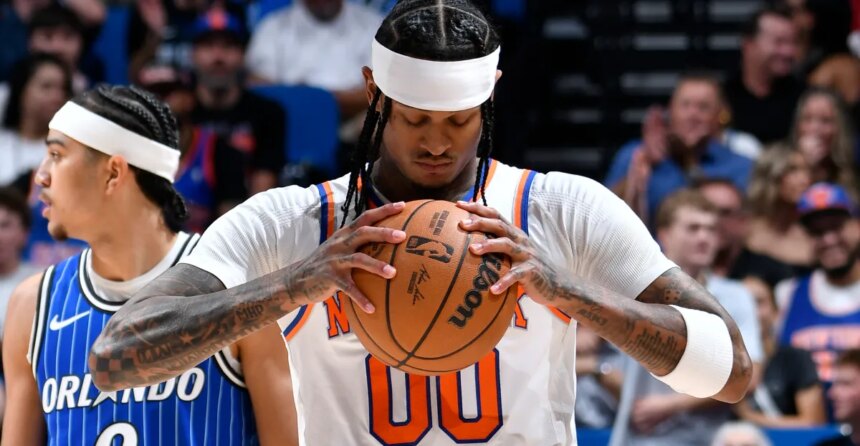
In recent discussions surrounding Jordan Clarkson’s performance, a mix of admiration and frustration has emerged, reflecting the duality of his career in the NBA. Over the course of 12 seasons, Clarkson has established himself as a potent scorer, notably averaging more than 15 points per game on eight occasions and receiving a Sixth Man of the Year award. This accolade places him in a prestigious group of bench scorers, akin to Jamal Crawford, Lou Williams, and J.R. Smith—players who once thrived in a league that cherished the explosive scoring from its reserves.
However, as the NBA evolves, so do the expectations for these roles. The current landscape demands not only scoring but also efficiency and playmaking ability, hallmarks of elite bench players in today’s game. Clarkson’s style, characterized by unpredictable shooting streaks and moments of brilliance blighted by inefficiency, has raised questions about his place on the Knicks and in the modern NBA.
This season has illuminated both sides of Clarkson’s game. In 23 contests, he has exhibited flashes of his scoring prowess, including a standout 24-point performance against the Miami Heat and several games where he topped 15 points. Yet, his performance has also been marked by inconsistency, shooting below 40% in multiple games, raising alarm among fans and analysts alike.
Recently, Clarkson finished a challenging stretch averaging only 12.3 points per game with a shooting percentage of 54.4%. The Knicks are in need of a ballhandler capable of not only scoring but facilitating plays, making Clarkson’s recent struggles particularly concerning. As a player who is often described as a “ball-stopper,” his tendency to not create opportunities for others intensifies scrutiny on his utility, especially when he is not scoring efficiently.
Despite his extensive experience, Clarkson has faced difficulties finding his rhythm in New York. His recent performances have been a stark reminder of why he was available and why teams were hesitant to invest in him; at 33 years old, he doesn’t possess the same agility as when he was younger, and his defensive efforts have been called into question. While his ability to erupt with a high-scoring game remains, his lack of consistent off-ball movement and poor playmaking continues to hinder the team’s effectiveness.
Although Clarkson’s shooting inefficiency was an understood risk when he joined the Knicks, the reality of his struggles has become hard for fans to overlook. His performance during a recent victory against the Magic raised red flags, as he appeared visibly disheartened and out of sync, suggesting a struggle for confidence that could affect his overall play.
Currently, the Knicks are winning, which has subdued some criticisms regarding Clarkson’s performance. However, should the team encounter a downturn or consecutive losses, the mounting frustration among the fanbase is likely to resurface, further amplifying scrutiny of his fit on the roster.
For Clarkson, both the team and its supporters are hoping for a turnaround. While he might never fully transform into a consistently efficient scorer or a reliable defender, a return to form—similar to what he displayed earlier this season—could ease tensions and allow him to reclaim the role he has carved out for himself. The path ahead may be fraught with challenges, but for both Jordan Clarkson and Knicks fans, the hope remains that he can recapture his scoring ability and help contribute to the team’s success.