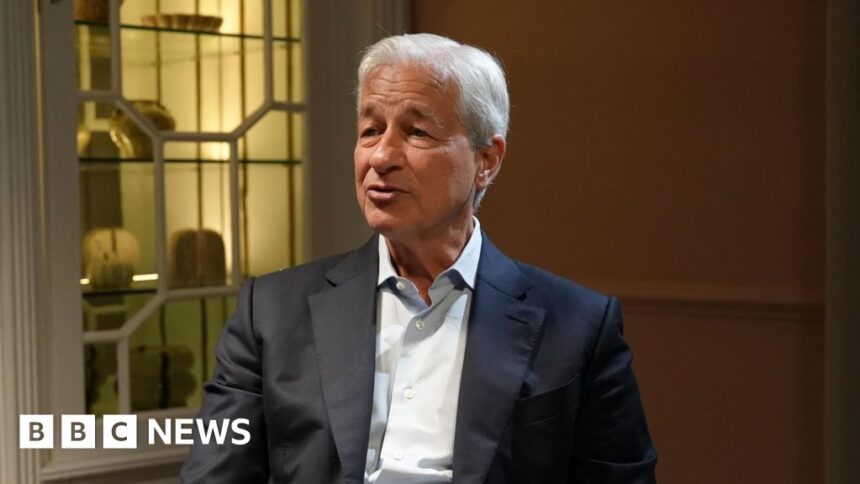
In a revealing interview, Jamie Dimon, the CEO of JP Morgan Chase, expressed heightened concerns about potential vulnerabilities in the U.S. stock market. Speaking to the BBC, Dimon stated that he is “far more worried than others” about the likelihood of a significant market correction occurring within the next six months to two years. His remarks underscore growing trepidation among financial leaders about the current state of the markets, which he describes as somewhat overheated, driven in large part by investment in artificial intelligence.
During his visit to Bournemouth to announce a substantial investment of approximately £350 million in the bank’s local campus, Dimon also unveiled a philanthropic commitment of £3.5 million to support local non-profits. Chancellor Rachel Reeves hailed the expansion as a major boost for the local economy. In a relaxed manner, he engaged with employees before addressing a town hall meeting, presenting himself in casual attire and energetically interacting with staff.
Dimon began his discussion by complimenting Reeves on her management of the UK economy, expressing optimism about governmental initiatives aimed at fostering innovation and reducing regulatory burdens. However, he remained cautious about broader economic conditions, citing a range of factors that contribute to an atmosphere of uncertainty, including geopolitical tensions, fiscal policies, and global remilitarization. He emphasized the importance of recognizing the elevated level of uncertainty afflicting the current economic landscape.
His comments coincided with warnings from the Bank of England, which drew parallels between the current bullish market in AI and the dot-com bubble of the late 1990s, cautioning that many of the valuations in this sector “appear stretched.” Dimon conceded that while he believes AI technology will ultimately be beneficial, many investments made in the sector are likely to result in losses, akin to historical trends with past innovations.
Dimon also addressed pressing global security challenges, reiterating his earlier warnings regarding military readiness in light of potential conflicts, particularly in the South China Sea. He suggested that a focus on bolstering military stockpiles is imperative in today’s increasingly perilous global environment.
Additionally, the interview touched on concerns surrounding the independence of the Federal Reserve amid pressures stemming from political commentary, notably from former President Trump, who has openly criticized current Fed chair Jerome Powell for not acting more aggressively on interest rates. While Dimon acknowledged the Fed’s crucial role, he expressed a belief in the bank’s independence from political influence.
On geopolitical matters, Dimon hinted at potential progress in trade negotiations between the U.S. and India, particularly concerning tariffs imposed due to India’s trade dealings with Russia. He conveyed optimism about fostering a closer relationship between the two nations.
With Dimon’s name surfacing in conversations about possible political aspirations, he humorously dismissed the notion of pursuing a political career, asserting his primary focus remains on steering JP Morgan towards sustained success and viability. Nonetheless, he suggested that if given the presidency, he would embrace the opportunity, displaying the charisma that has led to speculation about his potential involvement in politics.