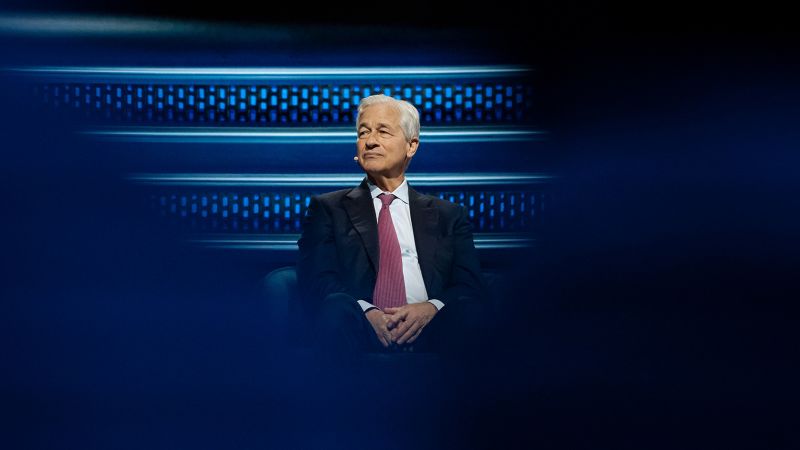
On Thursday, JPMorgan Chase responded vigorously to a lawsuit filed by former President Donald Trump, seeking to transfer the case from a Florida state court to a federal court. The lawsuit names both JPMorgan Chase and CEO Jamie Dimon, with the bank’s legal team arguing that Dimon was included “fraudulently” in the lawsuit.
In their notice, first highlighted by Bloomberg, JPMorgan’s lawyers contended that Trump’s lawsuit is rooted in a statute that specifically exempts federally regulated bank executives acting within their official capacities. This argument hinges on the premise that the Florida Deceptive and Unfair Trade Practices Act (DUTPA), under which the lawsuit was filed, does not apply to federally regulated officers like Dimon.
Trump’s lawsuit alleges that JPMorgan Chase improperly terminated his banking relationship in 2021, claiming that the bank made this decision influenced by political factors. The former president is seeking damages amounting to $5 billion for the alleged wrongdoings.
According to the filing, JPMorgan is classified as a citizen of Ohio, which plays a crucial role in the legal proceedings. Since none of the plaintiffs are citizens of Ohio, this creates grounds for the case to be adjudicated in federal court. The inclusion of Dimon in the lawsuit appears to be an attempt by Trump’s legal team to ensure the case remains in state court. However, JPMorgan’s lawyers maintain that Dimon was “fraudulently” included, reinforcing their position that the case should be moved to the federal level due to the statutory exemptions.
In addition to challenging the venue of the lawsuit, JPMorgan Chase’s legal team also offered a strong rebuttal to Trump’s claims regarding political motivations for his removal as a client. They described the allegations as “threadbare,” asserting that the claims lack sufficient factual basis to support the lawsuit. The lawyers pointed out that Trump’s legal team failed to adequately clarify key elements of their “blacklist” claim, raising questions about its validity.
The filing further highlighted the inadequacies in the specifics provided by Trump and his plaintiff group regarding the supposed blacklist, emphasizing the lack of details about its creation, distribution, or relevance in relation to JPMorgan’s regulatory obligations.
As the legal battle unfolds, JPMorgan Chase has refrained from commenting further on the situation, and efforts to gather reactions from the White House remain ongoing. The outcome of this case could have significant implications for both parties involved.