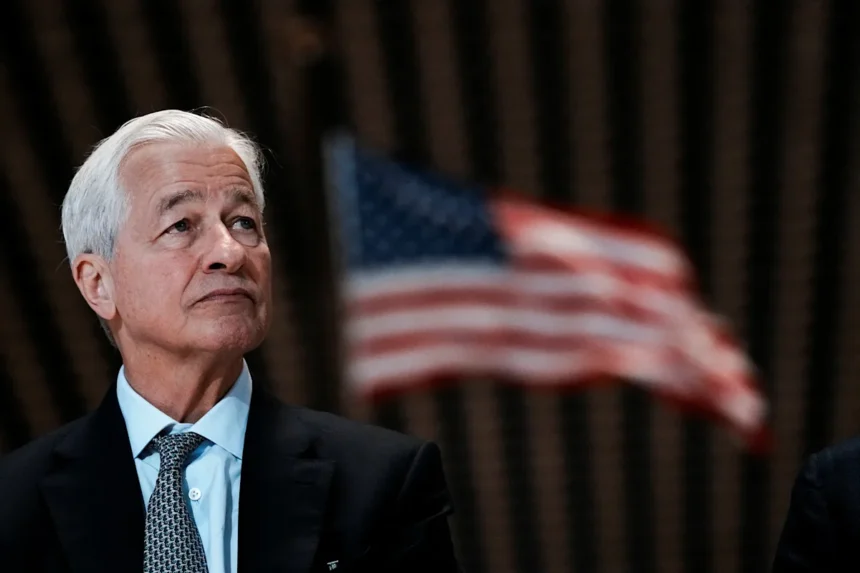
JPMorgan Chase & Co. CEO Jamie Dimon delivered a stark warning regarding the economic situation in Europe during his appearance at the Reagan National Defense Forum. He highlighted the slow-moving bureaucracy on the continent, expressing concerns that a “weak” Europe could pose significant risks to the U.S. economy.
“Europe has a real problem,” Dimon stated. He acknowledged the commendable aspects of Europe’s safety nets but remarked that these measures have inadvertently stifled business, investment, and innovation. However, he noted some positive trends, suggesting that investment and innovation in Europe are beginning to revive.
While appreciating the awareness some European leaders have towards these challenges, Dimon pointed out the complexities of political dynamics in the region. He has long identified the risk of a fragmented Europe as a critical global issue. In his shareholder letter earlier this year, he emphasized that Europe is grappling with serious problems that require urgent solutions.
Dimon praised the establishment of the euro and Europe’s commitment to fostering peace, but he also cautioned that diminishing military efforts and the difficulty in achieving consensus within the European Union could jeopardize the continent’s stability. He warned, “If they fragment, then you can say that America first will not be around anymore.” He added that the implications of a fragmented Europe would disproportionately affect the U.S., which relies on strong relations with its European allies.
Advocating for U.S. support, Dimon stressed the need for a long-term strategy aimed at strengthening Europe, stating, “A weak Europe is bad for us.” His comments come against the backdrop of a previous national security strategy under the Trump administration that deprioritized Europe, suggesting it was moving toward “civilizational erasure.”
In a bid to enhance national security, JPMorgan has committed to increasing investments in the defense sector. Recently, the bank declared plans to invest $1.5 trillion over the next decade into industries that bolster U.S. economic security and resilience—potentially exceeding previous investment projections by $500 billion.
Dimon pointed out the critical need for the U.S. to reduce its dependence on unreliable sources for essential minerals and products. Under the strategic direction of investment banker Jay Horine, JPMorgan’s initiatives will target supply chain improvements, advanced manufacturing, defense and aerospace sectors, energy independence, and emerging technologies.