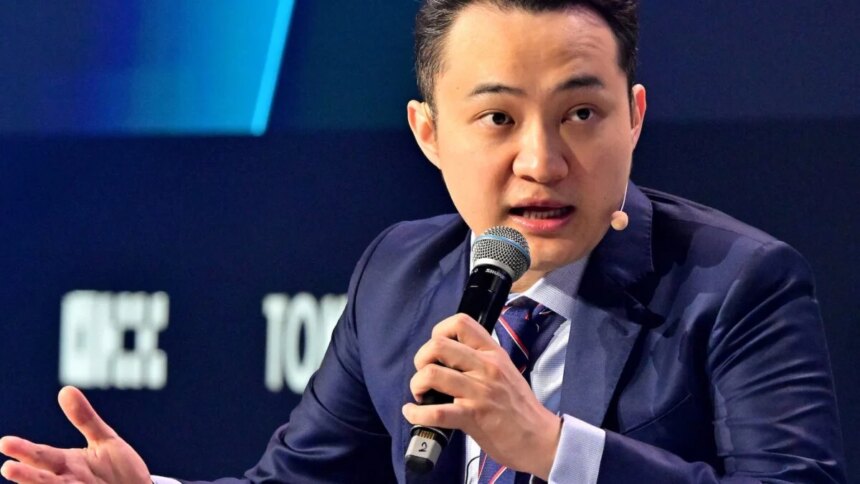
Tron founder and prominent crypto investor Justin Sun has raised serious allegations against World Liberty Financial (WLFI), a company linked to former President Donald Trump, accusing it of misconduct and a troubling lack of transparency. Sun, who was an early investor in the project, has previously been at the center of pay-to-play accusations involving the Trump administration’s Securities and Exchange Commission (SEC), largely fueled by his substantial financial commitments to both WLFI and the TRUMP memecoin.
Sun’s criticisms focus on two significant issues regarding WLFI. The first is a backdoor blacklisting feature embedded in the WLFI smart contract that provides the project’s team with the power to freeze any user’s tokens without prior notice or explanation. The second concern involves a recently acquired $75 million loan, in which the project’s treasury collateralized approximately five billion WLFI governance tokens on its affiliated decentralized finance platform, Dolomite. This borrowing mechanism has drawn unsettling parallels to Alameda Research’s tactics of securing loans against FTX’s proprietary FTT token just prior to the exchange’s infamous collapse.
In a public response on X, Sun expressed his frustrations, stating he has always supported Trump’s pro-cryptocurrency policies and had invested in WLFI based on a shared vision for a decentralized financial platform. Sun declared himself the “first and single largest victim” of WLFI, recounting an incident from September last year when WLFI blacklisted around 545 million of his tokens after he transferred approximately $9 million worth of them during a period of heavy selling pressure. Following this event, he publicly demanded the restoration of his assets, maintaining his innocence.
World Liberty Financial has since rebuffed Sun’s accusations, even mocking him on social media. Their official account suggested that Sun is attempting to deflect attention from his own alleged wrongdoings, asserting, “We have the contracts. We have the evidence. We have the truth. See you in court, pal.” The firm maintains that it only takes action against holders in response to malicious or high-risk activities.
It is important to note that Sun recently settled a long-standing SEC case involving allegations of wash-trading TRX tokens and conducting unregistered securities offerings. Although his entity, Rainberry, paid a $10 million fine, the settlement included no admission of wrongdoing. This situation has attracted attention from Democratic members of the House Financial Services Committee, who have pointed out the lack of a criminal conviction in light of Sun’s substantial investments in Trump-associated initiatives.
In a twist of irony, Binance, previously led by Changpeng Zhao (CZ), is reported to hold roughly $2 billion in WLFI’s USD1 stablecoin, a position poised to generate tens of millions in annual revenue for the project. Notably, Trump had pardoned Zhao after a brief imprisonment for anti-money laundering violations at Binance, while other developers associated with a privacy app faced significant legal consequences for similar charges.
Additionally, a firm linked to UAE National Security Adviser Sheikh Tahnoon bin Zayed Al Nahyan reportedly invested $500 million into WLFI just days before Trump’s inauguration, acquiring a 49% stake in the venture and sending $187 million to Trump family entities. This investment further underscores the complex web of financial dealings involving WLFI and its prominent backers.
The ongoing turmoil surrounding WLFI and its connections to the Trump administration has potentially dampened the anticipated positive impact on Bitcoin and the broader cryptocurrency market. Reports indicate that Trump-affiliated enterprises amassed approximately $1.4 billion in revenue in 2025 predominantly from memecoins and stablecoins rather than from Bitcoin itself. Despite this, there remains a glimmer of hope for reconciliation with Bitcoin advocates, contingent on the regulatory clarity promised by the proposed CLARITY Act. Meanwhile, advocacy groups warn that any removal of developer protections from the act before a vote could jeopardize the operational landscape for crypto builders, driving innovation away from the U.S.