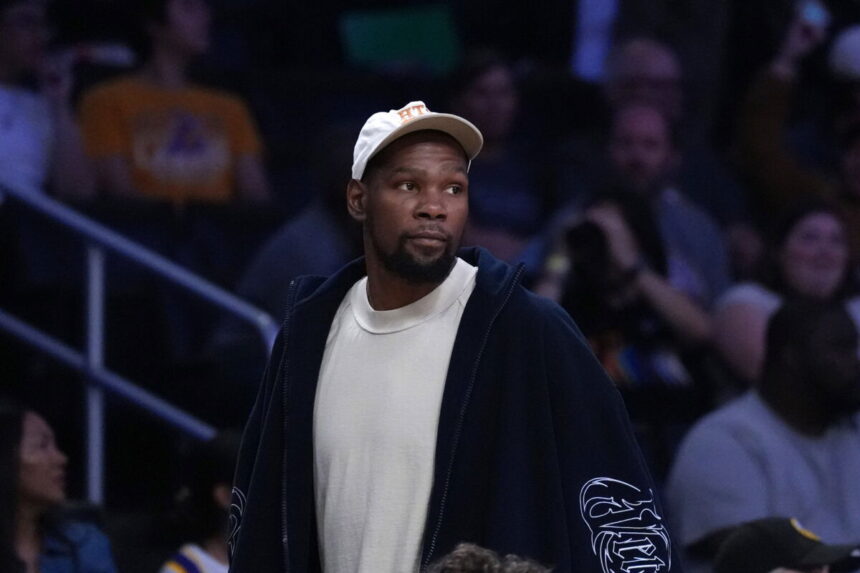
Kevin Durant has once again found himself at the intersection of sports and technology, this time with a story full of irony involving cryptocurrency. Recently, Durant and his business partner, Rich Kleiman, discussed their investments at Game Plan 2025, emphasizing Durant’s media startup, 35V, among other ventures. However, it was a conversation about Bitcoin that took center stage, uncovering an unexpected twist in Durant’s crypto journey.
The highlight of their discussion was a story from 2015, shortly after Durant joined the Golden State Warriors. During a birthday party hosted by prominent investor Ben Horowitz, the buzz around Bitcoin became unmistakable. Kleiman recounted the moment when he and Durant heard the term “Bitcoin” mentioned repeatedly throughout the evening. Intrigued by the hype, the pair decided to invest in Bitcoin the very next day. Fast forward to today, and they are left with a significant amount of Bitcoin that they cannot access due to a forgotten password to their Coinbase account.
Kleiman revealed that although their Bitcoin holdings have significantly increased in value, the locked account presents a perplexing challenge that has persisted for years. “There’s just a process we haven’t been able to figure out,” he explained, while noting that their inability to access the funds hasn’t dampened the value of those holdings. Despite the success of their investment, the situation has turned Durant into an unintended long-term holder, with no immediate solution in sight.
Adding another layer to the story, Durant’s relationship with Coinbase makes the irony even more pronounced. Since 2017, his ventures, including 35V, have partnered with the cryptocurrency exchange for funding and promotional activities. As a prominent face of Coinbase, Durant’s inability to access his account is striking and highlights a significant issue within the world of cryptocurrency: the risk of losing access to digital assets can lead to losing considerable sums of money.
This revelation is particularly illuminating in the context of other athletes’ experiences with crypto. Notably, Tom Brady was once a brand ambassador for the now-collapsed FTX, and Odell Beckham Jr. took his salary in Bitcoin while playing for the Los Angeles Rams. However, Durant’s story is more than just a marketing ploy; it presents a real dilemma involving valuable assets that are currently locked away.
As the cryptocurrency market continues to evolve, Durant’s experience underscores the importance of security and accessibility in managing digital assets. While the crypto world promises innovative investment opportunities, Durant’s unique situation serves as a cautionary tale, blending the excitement of technology with the harsh realities of financial management within the realm of professional sports.