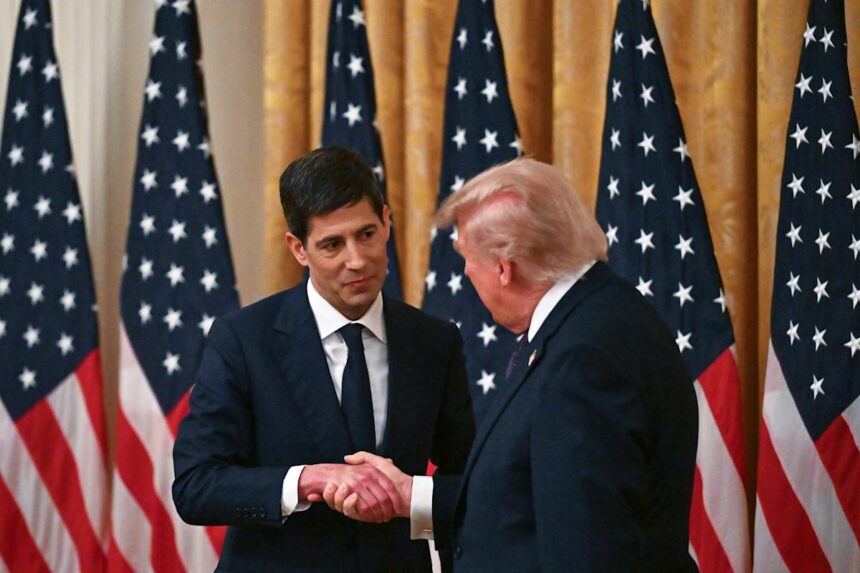
Newly sworn-in Federal Reserve Chair Kevin Warsh made significant remarks about his approach to governing the U.S. central bank during a ceremony in the East Room of the White House. In a clear nod to former Fed Chair Alan Greenspan, Warsh expressed his intentions to emulate the iconic leader’s style.
Having known five predecessors in his new position, Warsh emphasized that Greenspan set a standard for the role. He stated, “Like Alan, I intend to fill the role of chairman with energy and purpose, just the way Chairman Greenspan did.” Greenspan was known for maintaining interest rates during the 1990s tech boom, believing that rising productivity offset the need for hikes, despite inflation being comparatively stable.
This philosophy resonates with Treasury Secretary Scott Bessent, who has publicly advocated for Warsh’s appointment and frequently cites Greenspan as a model for economic management. Bessent argues that the Federal Reserve should resist hastily increasing interest rates during periods of technological advancement to allow for sustained economic growth. He has called for flexible monetary policies that encourage investment.
“The Fed needs to have merely an open mind,” Bessent stated in a recent speech, praising Greenspan’s historical reluctance to raise rates prematurely in the 1990s, suggesting that the decision was validated by economic outcomes.
Warsh has also highlighted the potential benefits of advancements in artificial intelligence, predicting that such innovations could enhance productivity, lower inflation, and create opportunities for rate cuts. During his confirmation hearing, he mentioned that the Fed should communicate less frequently and not telegraph its decisions before policy meetings—a practice that diverges from the current chair’s approach.
In discussing the Fed’s mandate, Warsh emphasized the importance of pursuing both price stability and maximum employment. He believes this approach, grounded in wisdom and resolve, can lead to lower inflation and improved living standards for Americans.
President Trump, speaking at Warsh’s swearing-in event, alluded to the need for lower interest rates as a strategy for managing national debt. He echoed sentiments stating that economic growth spurred by lower rates wouldn’t necessarily lead to inflation, a point also noted by Warsh.
As Warsh steps into this leadership role, he finds himself navigating a complex economic landscape influenced by an AI boom and rising oil prices, which have kept inflation above the Fed’s target for more than five years. He acknowledged the challenges ahead but remained optimistic about the potential for prosperity: “While I’m not naive about the challenges we face, I believe these years can bring unmatched prosperity that will raise living standards for Americans from all walks of life.”
As Warsh embarks on his tenure, he joins a group of 18 colleagues who are reevaluating their strategies regarding interest rates. Many Fed members express a willingness to consider rate cuts if inflation stabilizes or if employment figures weaken significantly. However, there is also a prevailing sentiment that some degree of policy tightening may be necessary if inflation persists above the Fed’s 2% target.
In a recent address, Fed governor Chris Waller highlighted the delicate balance the central bank must maintain, indicating an inclination to keep rates steady while remaining open to future hikes, particularly in response to potential long-term inflation effects stemming from oil price increases. This ongoing deliberation underscores the complexity of the decision-making environment the Fed faces as it navigates economic uncertainties.