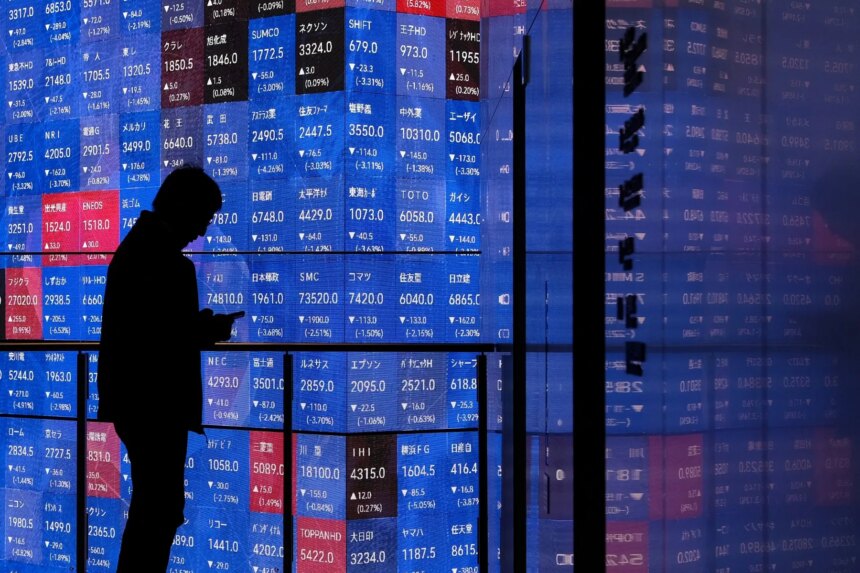
Stock markets across the Asia-Pacific region have experienced a significant downturn, driven by escalating tensions in the Middle East following US President Donald Trump’s stark ultimatum to Iran. In a dramatic warning, Trump threatened to “obliterate” Iran’s energy infrastructure if the country does not reopen the crucial Strait of Hormuz, a pivotal passage for global oil and gas exports.
Early trading saw Japan’s Nikkei 225 index plummet by 4 percent, while South Korea’s KOSPI suffered a 4.5 percent drop. Hong Kong’s Hang Seng Index experienced a decline of approximately 2 percent. Australia’s ASX 200 fell by about 1.6 percent, and New Zealand’s NZX 50 dipped 1.3 percent, indicative of widespread concern over the implications of a potential conflict in the oil-rich region.
Futures for Wall Street also reflected anxiety in the markets, with contracts tied to the S&P 500 and Nasdaq Composite losing about 0.5 percent. Amid these market fluctuations, oil prices maintained volatility, with Brent crude futures witnessing an initial rise to over $114 per barrel before settling around $112.
The tension escalated when Trump announced that if Iran did not lift its blockade of the Strait of Hormuz, effective within 48 hours, the United States would take decisive military action. This waterway is critical for the transit of roughly one-fifth of the world’s oil and natural gas supplies. In response, Iran has threatened to completely close the strait and retaliate against energy and water infrastructure throughout the region, raising fears of a broader conflict.
The deadline for Trump’s ultimatum is set for 23:44 GMT on Monday, intensifying market anxieties. This latest threat comes amid an ongoing military campaign involving the US and Israel against Iran, which has now surpassed a month, leading to a surge of over 50 percent in oil prices since its inception on February 28.
Analysts caution that should the strait remain effectively obstructed, prices could escalate further, with projections suggesting oil could reach prices between $150 and $200 per barrel. The international community is keeping a close watch on developments, especially as Trump held a phone conversation with UK Prime Minister Keir Starmer to discuss the necessity of reopening the Strait of Hormuz and ensuring global energy market stability.
Confusion surrounds Trump’s military objectives and the expected duration of the conflict. Just prior to issuing the ultimatum, Trump hinted that his administration was nearing its objectives and contemplating a de-escalation of military operations. However, Israeli military representatives have indicated that plans for continued operations in the region remain in place for at least another three weeks.
Market participants and global energy stakeholders are now bracing for further volatility as geopolitical tensions threaten to reshape the landscape of energy supplies and prices worldwide.