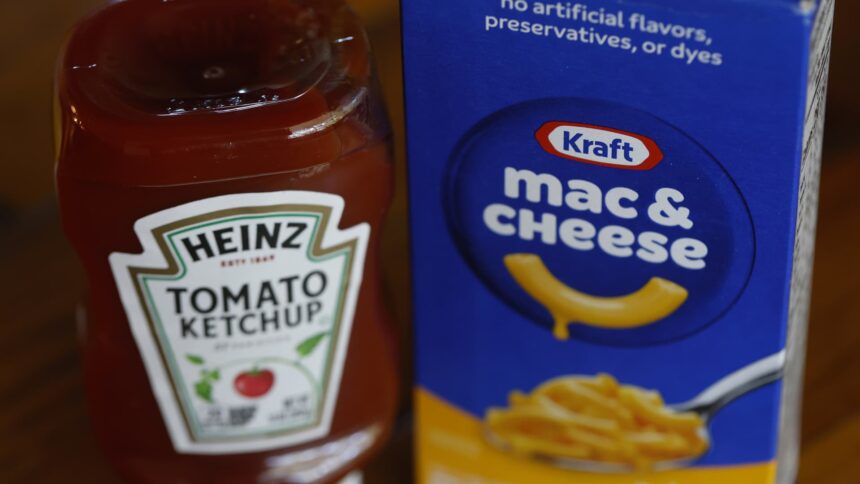
In a significant development for the food industry, Kraft Heinz has announced plans to split into two separately traded companies, marking a reversal of its 2015 megamerger orchestrated by prominent investor Warren Buffett’s Berkshire Hathaway and private equity firm 3G Capital. This move reflects a broader trend within the industry as companies respond to increasing consumer and regulatory pressures against ultra-processed foods.
The decision to separate comes as Kraft Heinz and other large food corporations face declining sales and shifting consumer preferences, with many turning to fresher and less processed options. This trend has been further exacerbated by economic factors such as price hikes and “shrinkflation,” along with evolving health agendas promoting healthier eating habits. The rise of medications like GLP-1, targeting diabetes and obesity, has also contributed to diminishing interest in traditional snack foods among key consumer demographics.
The divestiture movement is not limited to Kraft Heinz. Last year, Unilever divested its ice cream division to create The Magnum Ice Cream Company, while Keurig Dr Pepper is set to undergo a similar separation following its acquisition of JDE Peet’s. According to a recent Bain survey, nearly half of mergers and acquisitions activity in the consumer products sector in 2024 is expected to stem from divestitures. The same survey indicates that 42% of M&A executives in the consumer products industry are preparing to sell off assets in the next three years.
Experts attribute this trend to fierce competition and operational complexities that have arisen as companies grow larger. Emilie Feldman, a professor at The Wharton School, emphasized that market pressures are increasingly making it challenging for major players to maintain profitability and clarity in their business strategies. In light of dwindling demand, many corporations are attempting to streamline operations by shedding underperforming brands.
Kraft Heinz’s forthcoming quarterly earnings reports and presentations at the annual CAGNY Conference in February are anticipated to provide further insights into their strategic plans. Companies like Nestlé are similarly evaluating their portfolios, contemplating the sale of multiple brands amid a changing market landscape.
Consumer behavior has shifted notably over the past decade, with sales of products from the inner aisles of grocery stores declining. The pandemic temporarily reversed this trend, leading to increased purchases of familiar brands. However, as the pandemic receded, many consumers reverted to healthy eating patterns, impacting sales of legacy food brands.
The recent focus from regulators and health advocates on processed foods has intensified scrutiny on companies that produce them. Investors are growing more impatient with declining stock prices and are calling for management to concentrate on core offerings while divesting slower, non-core brands. Activist investors have heightened these calls, compounding pressure on companies such as Kraft Heinz to act decisively.
While some companies have benefited significantly from spin-offs—like Kellogg’s recent division into Kellanova and WK Kellogg—there remains skepticism about whether simply selling brands will generate long-term value. Analysts caution that addressing the underlying issues within a company is vital; otherwise, merely divesting brands may not resolve the deeper challenges at play.
As Kraft Heinz prepares for its split, there is speculation about the potential future of both resulting entities. The company has appointed Steve Cahillane, formerly of Kellogg, as its CEO to lead the spinoff, featuring high-growth brands like Heinz and Philadelphia. However, acquiring either of the new firms post-split could prove daunting and maybe even unlikely due to the scale of such acquisitions.
The divestiture trend is unlikely to abate soon. Companies like General Mills are actively selling brands to concentrate on their core strengths, and Nestlé is reportedly considering divesting parts of its beverage and coffee businesses. This ongoing transition may require food giants to be more judicious in their acquisitions, focusing heavily on smaller, emerging brands that are capturing market attention.
Despite the chaotic environment, some experts argue that fundamental hard work and insightful management may be more beneficial than flashy deals aimed at boosting stock prices. The path to recovery and growth may lie in deploying thoughtful strategies that prioritize consumer preferences and operational efficiencies, thus allowing these companies to navigate the evolving market landscape.