A significant trial centered on social media addiction commenced in California, drawing attention due to the involvement of prominent tech executives. The case revolves around a 19-year-old plaintiff known as KGM, who claims that the design of social media algorithms has led to her addiction and adversely impacted her mental health. The defendants in this landmark suit include major players in the tech industry: Meta, the parent company of Instagram and Facebook; ByteDance, which owns TikTok; and Google, the parent company of YouTube. Notably, Snapchat recently reached a settlement with the plaintiff prior to the trial.
This case, taking place at the Los Angeles Superior Court, is viewed as the first in a series of lawsuits that could redefine how tech companies are held accountable for the effects of their products. Traditionally, these companies have relied on Section 230 of the Communications Decency Act, enacted in 1996, which has provided them immunity from liability concerning third-party content. However, the current litigation challenges this established legal framework by focusing on the design choices surrounding algorithms, notifications, and other features that influence user interaction with the apps.
Matthew Bergman, KGM’s attorney, highlighted the gravity of the situation, emphasizing that many young individuals worldwide are suffering from issues similar to KGM’s due to the harmful algorithms utilized by these platforms. He firmly stated that companies must be prepared to justify their prioritization of profits over the well-being of young users in front of a jury.
Legal experts weigh in on the potential ramifications for the tech industry. Eric Goldman, a law professor at Santa Clara University, noted that a defeat in court could pose a substantial threat to the companies involved. However, establishing a direct causal link between the alleged harms and the companies’ practices may prove challenging for the plaintiffs.
The trial is poised to reveal a wealth of evidence, including internal documents from the involved companies, which may reflect practices they have previously sought to keep confidential. Professor Mary Graw Leary from Catholic University of America indicated that this court setting would provide a platform for exposing the inner workings of these platforms to public scrutiny.
In the lead-up to the trial, Meta has claimed it has implemented measures to create a safer online environment for teenagers, although many researchers have questioned the efficacy of these tools. The companies are likely to argue that any harm cited by the plaintiff stems from actions by third-party users rather than their platform design.
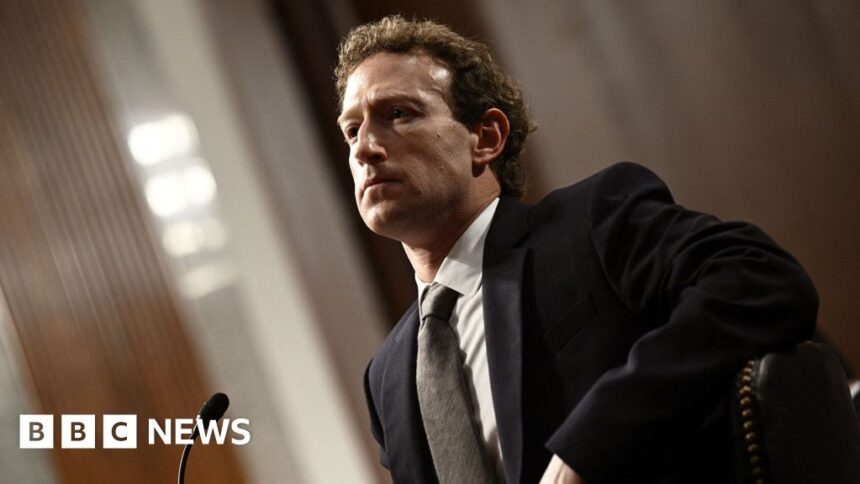
Among the witnesses anticipated to provide testimony is Meta’s CEO, Mark Zuckerberg, who has faced criticism for his previous statements regarding the relationship between social media use and mental health. During a 2024 Senate hearing, he stated that existing studies had not definitively proven a causal connection. He did, however, express regret to the victims and their families present at that hearing.
The stakes are high as the trial unfolds amid increasing scrutiny from various sectors, including families, educational institutions, and legal authorities worldwide. Last year, numerous U.S. states filed lawsuits against Meta, accusing it of misleading the public about social media risks and contributing to a mental health crisis among youth. Meanwhile, Australia has taken legislative action to restrict social media access for users under 16, with the UK indicating potential similar measures.
The evolving legal landscape reflects a growing realization of the dangers posed by social media, with an emphasis on holding tech companies accountable. Legal experts and observers suggest that this trial signifies a critical juncture in the relationship between technology and societal well-being, indicating a shift away from the historically lenient treatment these companies have enjoyed. As the proceedings continue, many are watching closely to see how the legal system will navigate these new and complex questions surrounding social media’s impact.