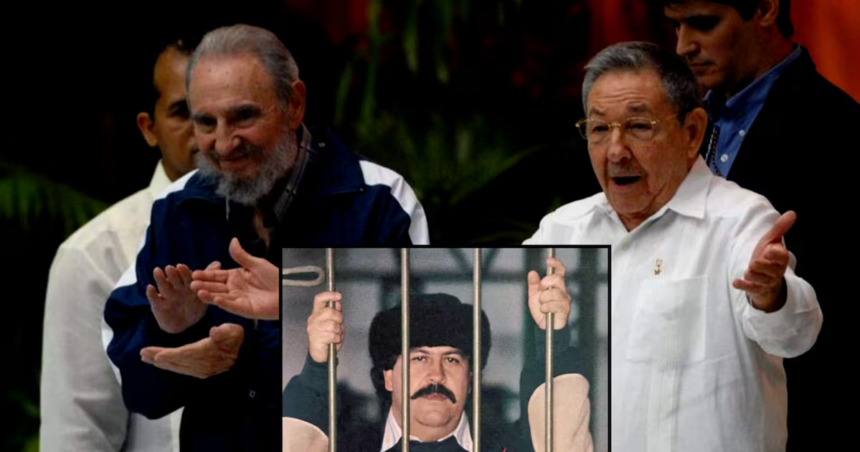
In a revealing new interview on the podcast Más allá del silencio, former drug lord Carlos Lehder elaborated on the connections between the Medellín Cartel and Fidel and Raúl Castro, who were the leading figures of the Cuban dictatorship at the time. Lehder, known for his significant role in Colombia’s drug trafficking scene during the 1980s, stated that many of the details about these associations are documented in his book Vida y muerte del cartel de Medellín.
In the interview, Lehder discussed his extensive contacts not only with the Castro brothers but also with the Sandinista government in Nicaragua and the Panamanian dictatorship. He recounted an invitation he received while in the Bahamas to visit Cuba, facilitated by a doctor. After two months, he traveled to Havana, landing there with the Castro family’s approval—a move he claims was initially perplexing to him regarding the intentions of the regime.
Lehder’s knowledge about the Castro regime’s ambitions increased after a pivotal meeting in 1981 with Colonel Tony de la Guardia, who was later executed by the Cuban government for alleged narcotics involvement. He learned that the Cuban leadership was interested in establishing a cocaine trafficking route to the United States, a proposition he deemed “ridiculous” due to the Cubans’ limited capitalist resources and their insistence on using their banking system for the drug proceeds.
Despite Lehder’s connections, he indicated that the Medellín Cartel, aside from Pablo Escobar, was largely uninterested in partnerships with the Cubans. He recounted discussions with his cartel associates upon return from a meeting with Cuban officials, noting that Escobar, in particular, expressed caution about collaborating with the Castro regime.
Lehder claimed he never directly worked with the Cuban dictatorship, but he is convinced that Escobar did. He noted that many of the Cuban officials who approached him later faced allegations of drug trafficking. His apprehensions were confirmed years later when he learned that some of those officials had been executed by the Cuban government for their ties to narcotics.
During a later encounter with Raúl Castro, Lehder described a brief and cold exchange, where Castro referenced revolutionary rhetoric. The brevity of the meeting made it clear to Lehder that any potential business dealings would stem from the highest levels of the regime.
He revealed a pricing proposal during their discussions: $1,000 per kilogram of cocaine, with the code word “canela” used to initiate the conversation. Lehder was acutely aware that the U.S. authorities had extensive intelligence on these efforts, leading to widespread concern within the Cuban military establishment once the DEA began to uncover the connections.
Through these reflections, Lehder painted a complex picture of the illicit drug trade during a tumultuous period in Latin American history, emphasizing the intersecting interests of powerful political figures and organized crime.