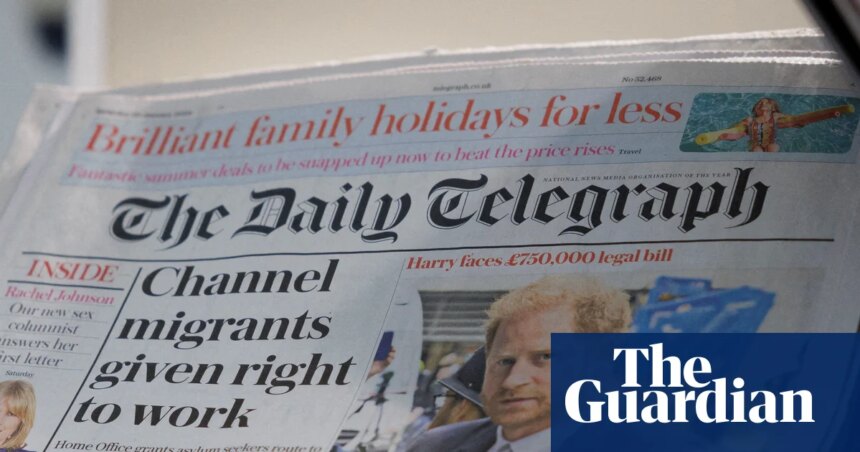
As the dust settles on the protracted battle for the ownership of the Daily Telegraph, Lord Rothermere has emerged victorious. With a storied history in British newspapers spanning over a century, Rothermere’s acquisition signals a pivotal moment for UK media.
The announcement of a £500 million deal between the Daily Mail and General Trust (DMGT) and RedBird IMI comes as a relief amidst a tumultuous bidding process that began in 2023. This sale was largely prompted by debts accrued by the Barclay family, who previously owned the Telegraph titles and the Spectator magazine.
Lionel Barber, former editor of the Financial Times, remarked on Rothermere’s strategic maneuvering, describing the situation as “a very British stitch-up.” He noted that Rothermere’s patience has paid off, placing him in a winning position. “Rothermere was sitting there with 9%, and therefore would have been in a very strong position in five or seven years to take over,” Barber elaborated.
This latest acquisition follows RedBird Capital’s withdrawal from the bidding war, a decision influenced by considerable campaigning from journalists within the Telegraph’s newsroom. They sought to scrutinize RedBird’s connections with China and its potential implications for media independence. Concerns about foreign investment in UK media had escalated, leading to public calls for government intervention, even eliciting a humorous comment from Keir Starmer during parliamentary sessions about the need to nationalize the newspaper.
If the deal is finalized swiftly, as anticipated by DMGT, it will extend the company’s influence within the British media landscape. The Daily Telegraph will join the ranks of DMGT’s other iconic titles, including the Daily Mail and Mail on Sunday. However, the potential consolidation of media organizations, particularly those aligning with right-wing perspectives, has raised alarms among critics.
Culture Secretary Lisa Nandy has vowed to review any future buyer, emphasizing the need for editorial independence. Still, there’s apprehension that this move could exacerbate the already significant right-leaning bias in British media. Critics, including former Labour party communications director Tom Baldwin and ex-Labour leader Lord Kinnock, have expressed concern that the merger could undermine media plurality and contribute to a homogenous narrative.
Baldwin articulated the risks of further consolidation in media power, stating, “A merger between the Mail and the Telegraph will only exacerbate that.” He also cautioned against the implications for public discourse and democratic processes, urging the government to consider the broader consequences of allowing the Daily Mail to strengthen its position in the media landscape.
Kinnock echoed this sentiment, pointing out that the creation of a dominant right-wing media entity would likely reduce competition and diversity in the dissemination of information and opinion. He urged the competition authority to weigh these factors heavily in their considerations.
Despite the concerns voiced by Labour leaders, Barber commented on the apparent lack of proactive measures from the government to defend against the rise of a media behemoth. “For any Labour party member or even minister to be complaining about the consolidation of the right in the media, it just rings rather hollow,” he stated, highlighting the vacuousness of their opposition to the deal given their previous inaction.
As the situation continues to develop, the implications of Rothermere’s takeover will undoubtedly shape the future of UK media and public discourse.