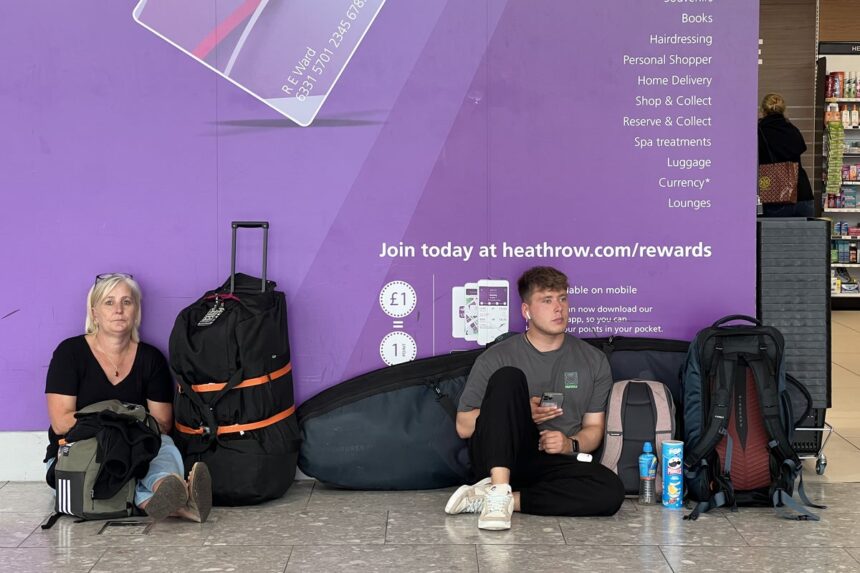
Major European airports faced significant disruptions over the weekend following a severe cyber attack that impacted check-in and boarding systems, resulting in widespread delays and cancellations. Airlines operating out of Heathrow, Brussels, and Berlin struggled to manage the chaos, forcing them to implement manual check-in processes and leaving passengers stranded in long queues.
The incident began late Friday evening, with airlines experiencing unexpected difficulties in accessing crucial systems made available through Collins Aerospace, a company specializing in aerospace and defense technologies. As a result, many travelers found themselves uncertain about their flight statuses, leading to hours-long waits at airport terminals on Saturday and a continued ripple effect into Sunday. Passengers were advised to avoid heading to airports unless their flights were confirmed, amplifying the frustration felt by many.
Airlines publicly expressed their discontent over the situation, frustrated by the additional burden of rebooking travel, arranging accommodations, and providing meals for stranded passengers. Both the airlines and travelers are now demanding answers regarding the origins of the attack and considering what protections can be implemented to prevent such breaches in the future.
While some speculation has been raised about potential Russian involvement, no evidence has confirmed these claims. The Liberal Democrats’ foreign affairs spokesperson, Calum Miller, called for an urgent investigation to determine if there was a connection to the Kremlin, particularly in light of recent tensions surrounding aviation safety in Europe. This speculation follows reports of numerous incursions by Russian drones into Polish airspace, raising alarm bells across the continent.
However, cybersecurity experts have highlighted that recent cyber attacks, including a significant breach of British retailer Marks & Spencer earlier this year, have often been linked to criminal organizations seeking financial gain, rather than state-sponsored initiatives. As such, it remains unclear whether this cyber incident is part of a larger geopolitical agenda or a standalone attack by hackers motivated by profit.
Vykintas Maknickas, CEO of NordVPN’s travel eSIM app Saily, emphasized the threat that such vulnerabilities pose to the aviation sector, which increasingly relies on interconnected systems for its operations. He pointed out that while efficiency is enhanced by these systems, it also creates a risk whereby a cyber attack on a single vendor can lead to widespread disruption across multiple airports. Current incidents are prime examples of the supply-chain vulnerabilities that plague the industry.
With Heathrow, Brussels, and Berlin identified as the primary airports affected, the repercussions extended to major hub cities like Paris, Lisbon, and Amsterdam, resulting in substantial delays and cancellations throughout the network.
Experts are now sounding the alarm, warning that this incident could be indicative of larger vulnerabilities in aviation cybersecurity. They assert that airlines must develop robust backup plans capable of activating in the event of a cyber attack. Maknickas stresses the importance of viewing cybersecurity not just as an IT issue but as a critical operational safety concern that could impact trust and confidence among travelers.
As travelers continue navigating the disruption, they are left hoping for transparency and accountability from airlines and systems providers, along with visible investments in resilience to safeguard against future architectural failures in the increasingly digital and interconnected landscape of global air travel.